

CONTROLLED ADHESIVE-FREE AREAS
Tape with Deliberately Non-Adhesive Zones
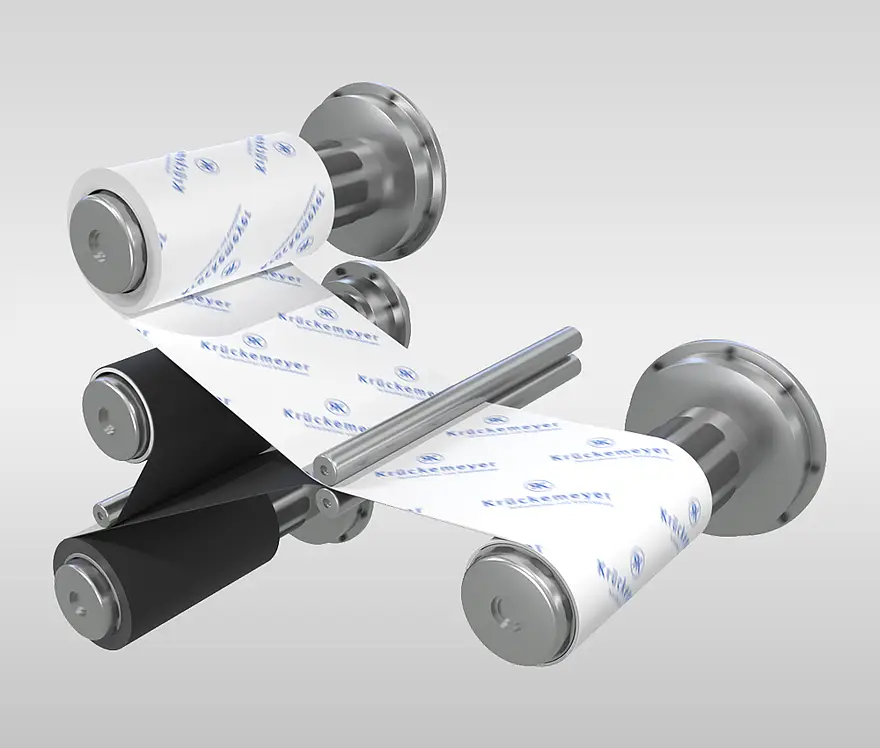
Where only selected parts of a tape should adhere, a suitable covering layer can shield the other areas. Krückemeyer matches the tape, covering layer, geometry and delivery format to your application.
01
ADHESIVE-FREE FUNCTIONAL ZONES
How are areas of adhesive tape made non-adhesive?
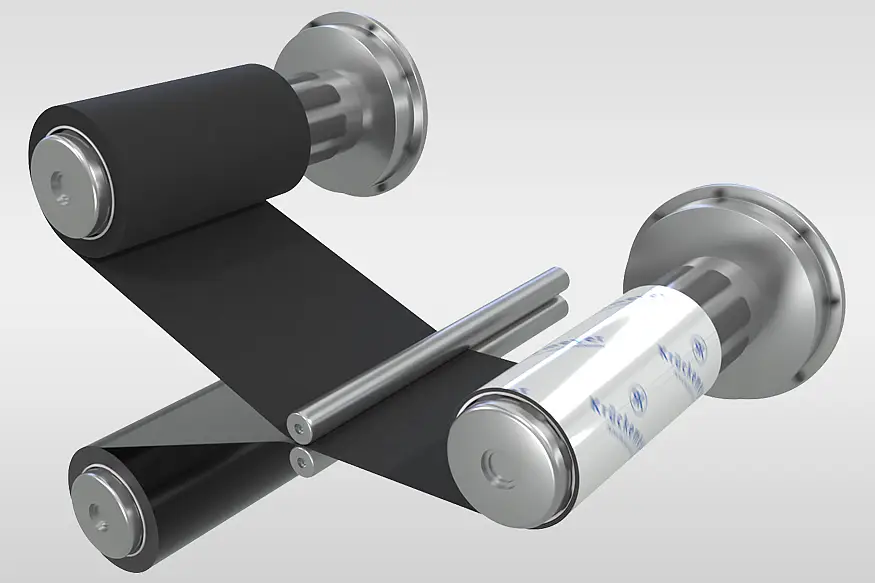
Here, a non-adhesive area is created by laminating a suitable non-adhering layer onto selected parts of the adhesive coating. The remaining adhesive function is a separate requirement: the areas to be covered and those that must subsequently adhere need to be defined on the component.
Possible designs include individual strips, multiple parallel strips and customised two-dimensional contours. A covered grip area can make handling easier; in a cable duct, a non-adhering zone can avoid unwanted contact with cables or components. Whether the covering remains in place or is removed before bonding must be defined for the specific application.
The base material, covering layer, dimensions and subsequent application are reviewed together. The tape designation alone confirms neither a specific material combination nor a general manufacturing limit.
02
FROM ADHESIVE ZONE TO DELIVERY FORMAT
Step 01
Define the function and application
Show us which areas must adhere and which must remain free. The component, contact surfaces, handling and service conditions are the starting point.
Step 02
Review the material build
Krückemeyer reviews the existing or intended tape and a suitable covering layer. The material combination and subsequent processing determine the build.
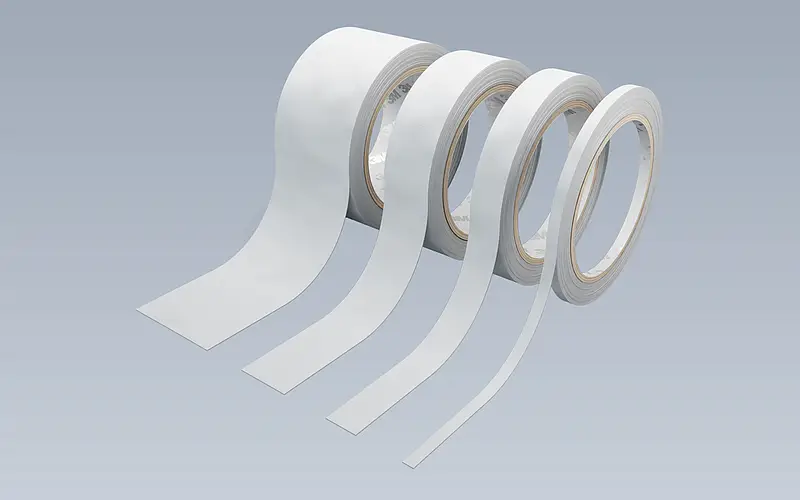
Step 03
Agree the zones and format
The position and geometry of the non-adhesive areas, tape width and delivery format are specified using a drawing or sample; a trial can assess handling.
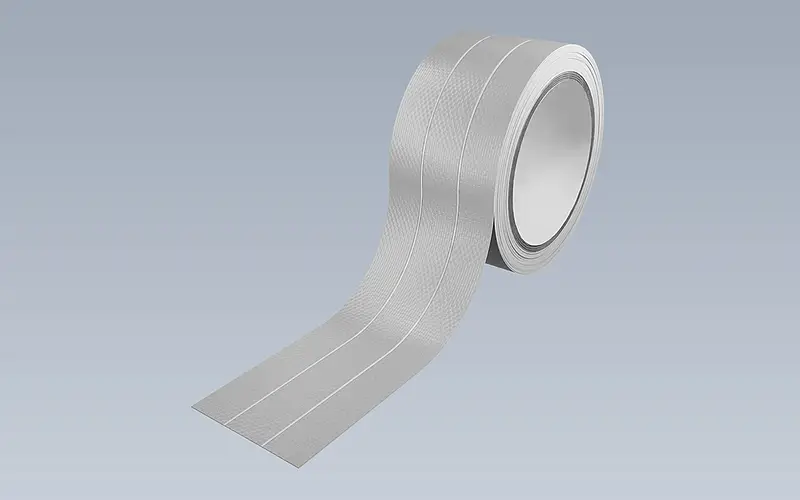
Step 04
Laminate and supply
After the design is agreed, suitable webs are brought together and supplied in the agreed format. The outcome is assessed against the intended application.
03
DESIGNING ZONES AND COVERINGS
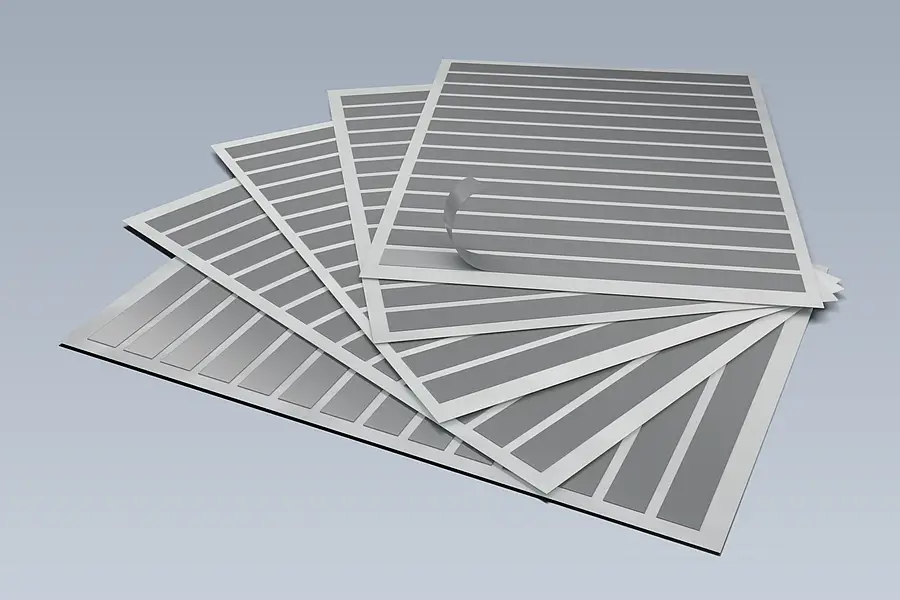
Strip-shaped areas
Individual or multiple parallel strips can be covered selectively. The position and width of the zones are defined for the particular web and handling process. Enquire about strip zones →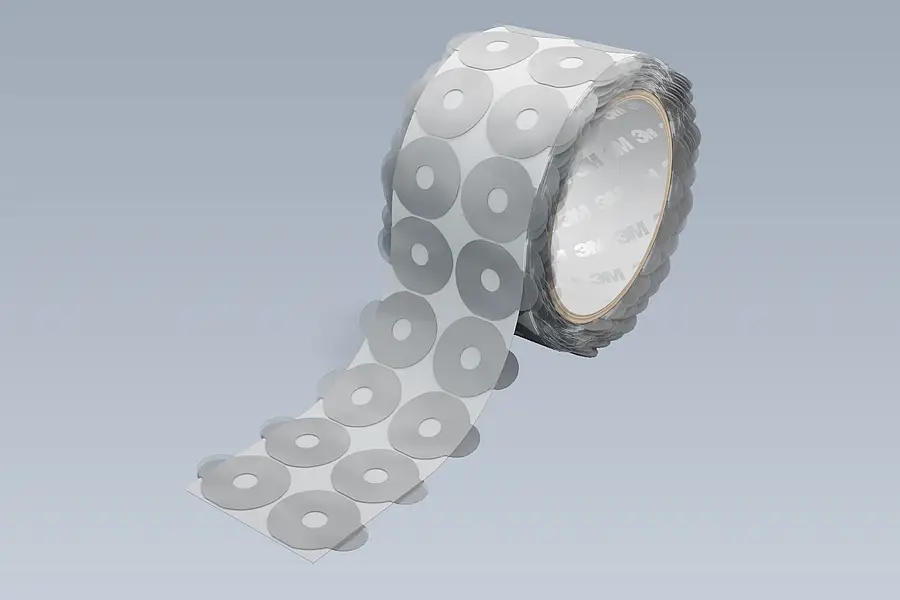
Shaped grip areas
Non-adhering grip points can be tailored to the intended handling. The possible contour and its production must be reviewed for the material. Discuss a grip area →04
POSSIBLE OUTCOMES
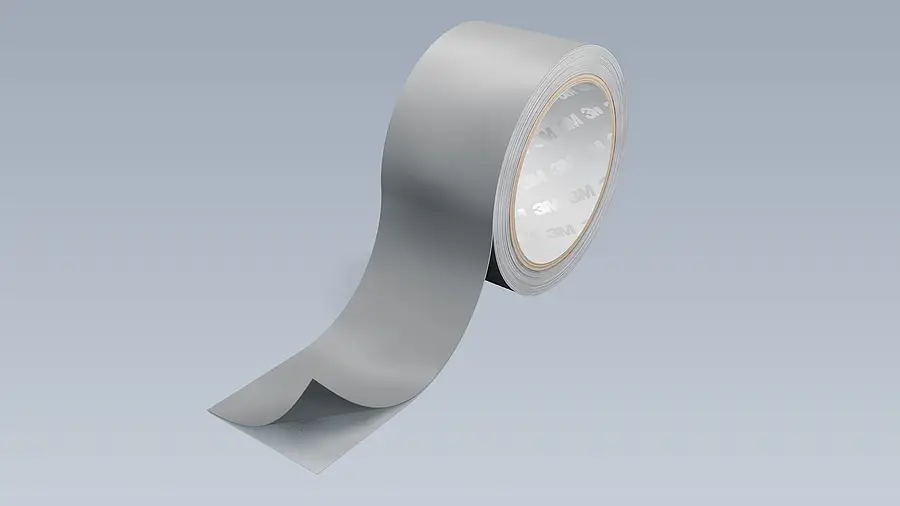
Tape with a covered zone
A defined part of the adhesive surface is shielded by a suitable layer. The remaining adhesive area and subsequent processing are designed together. Enquire about a covered zone →
Handling with a grip point
A non-adhesive grip point can assist picking up and removing a part during assembly. Its shape and position follow the component and application. Discuss the grip point →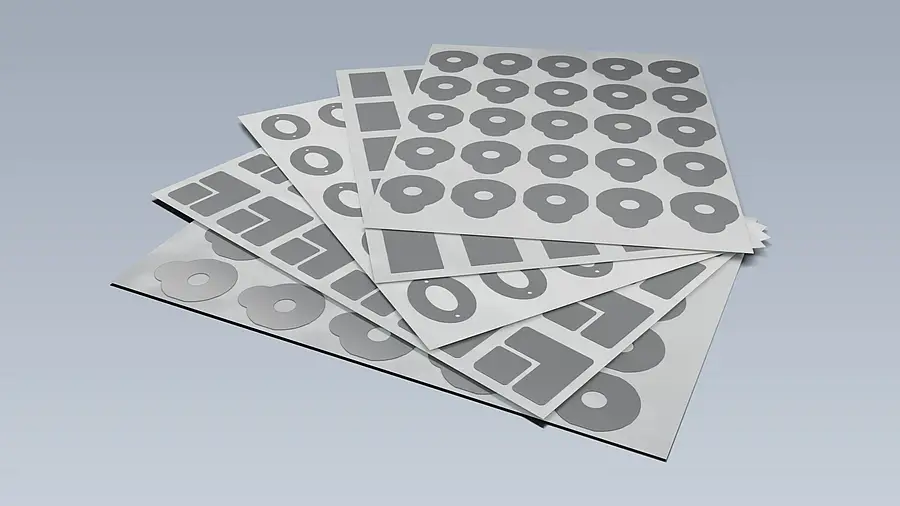
Die-cut parts
Die-cut parts can be made with deliberately non-adhesive areas. Their contours and the position of these areas are agreed from a drawing or sample for the intended application. Enquire about die-cut parts →05
POSSIBLE BASE MATERIALS
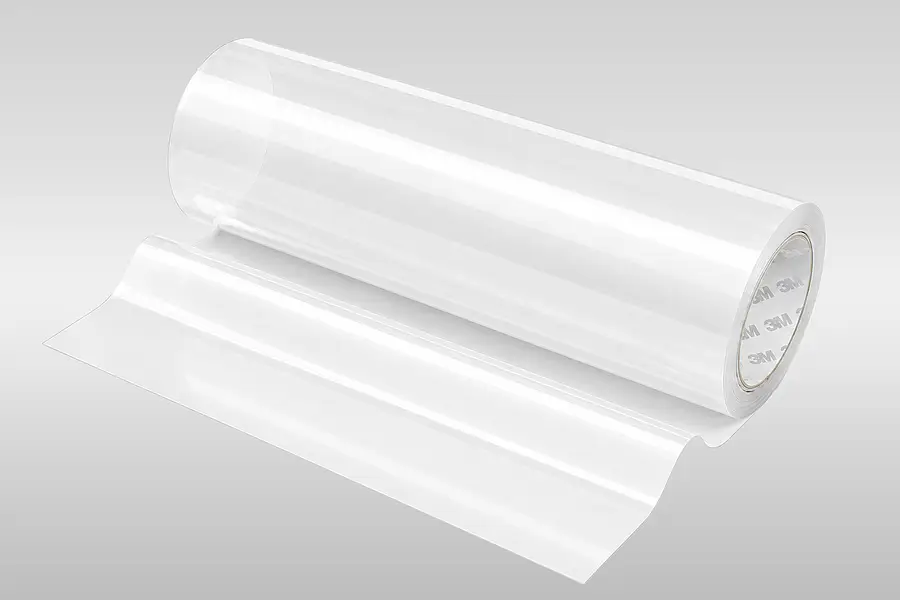
Single-sided tapes
Single-sided tapes are possible base materials. The backing, adhesive coating and intended covering must be suitable for the required zone. Explore tape lamination →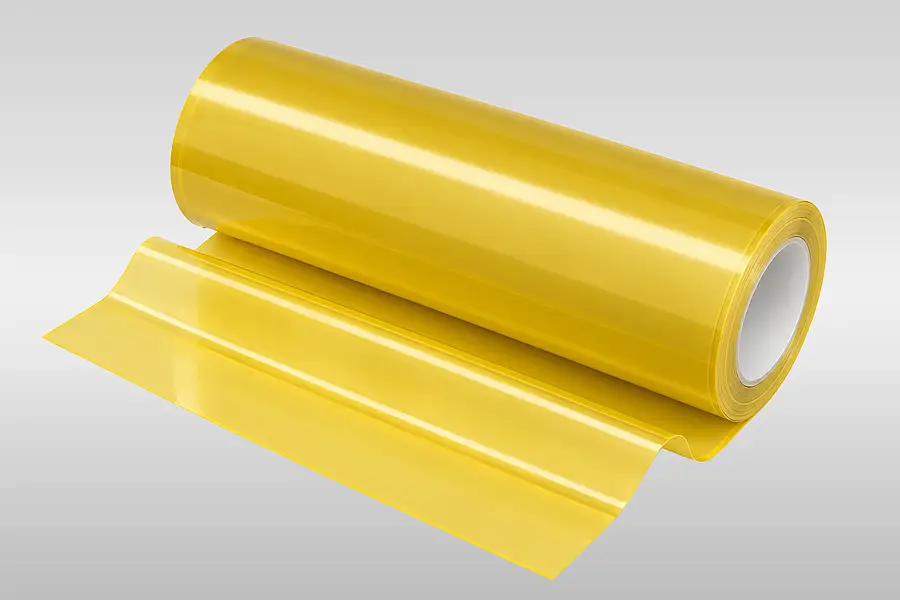
Double-sided tapes
Double-sided tapes may also be considered. The decisive point is which side or area must adhere in use and which must remain covered. Review lamination →06
COVERING THE ADHESIVE IN THE VIDEO
07
WHAT DETERMINES THE DESIGN
| Question to clarify | Effect on the design |
|---|---|
| Which area must not adhere? | The position, width and contour of the covering follow the component and handling. |
| What is the base material? | The tape build and covering layer are checked for suitability for lamination. |
| Will the covering remain in place? | The later function determines whether the area stays covered or needs a removable layer. |
| How will the tape be applied? | Geometry and delivery format must match the manual or automated application process. |
Review per project
08
INFORMATION FOR YOUR ENQUIRY
Describe the application, the component and the purpose of the non-adhesive area. Tell us which tape you plan to use or currently use, which surfaces should adhere or be covered, the dimensions, contour, delivery format and planned quantity.
A drawing, sample and details of the subsequent application help us assess the material build and feasibility. If the covering is to be removed, also explain when and how it will be handled.
09
MORE ON TAPE CONVERTING
10
QUESTIONS ABOUT NON-ADHESIVE ZONES
How can an area of self-adhesive tape be made non-adhesive?
A suitable non-adhering layer is laminated onto the intended part of the adhesive coating. That area then has no adhesive contact at the surface, while the remaining adhesive function is designed for the application. The covering layer, zone geometry and processing are assessed for the actual base material; this does not imply a general chemical modification of the adhesive.
Which tapes can have a covered adhesive area?
Single-sided and double-sided tapes are possible base materials. That does not mean every build is suitable. The backing, adhesive coating, covering layer, zone geometry and subsequent handling need to work together. If you already use a particular tape, include its designation or a sample for review.
Are non-adhesive strips and grip areas possible?
Strip webs, multiple parallel strips and customised two-dimensional shapes are possible designs. Non-adhesive pull tabs can assist gripping during application. The zone position and feasible size depend on the component, material and manufacturing route; no fixed shape or universal minimum size is promised.
What information helps with a non-adhesive tape enquiry?
Provide the application, base material, areas that must adhere or remain non-adhesive, dimensions, planned quantity and delivery format. A drawing or sample makes the zone positions clear. Also explain whether the covering is to remain in place or be removed during assembly, as this changes the handling concept.
Define the adhesive zones for your application
Send us the component, base material and required non-adhesive areas. We will review a suitable build and delivery format with you.

ADHESIVE TECHNOLOGY AND CONVERTING
Thomas Klein
Contact for converting
Discuss the adhesive zones, base material and required handling with Thomas Klein.