

Laser cutting of rubber
Laser cutting rubber: contours and cut parts for your application
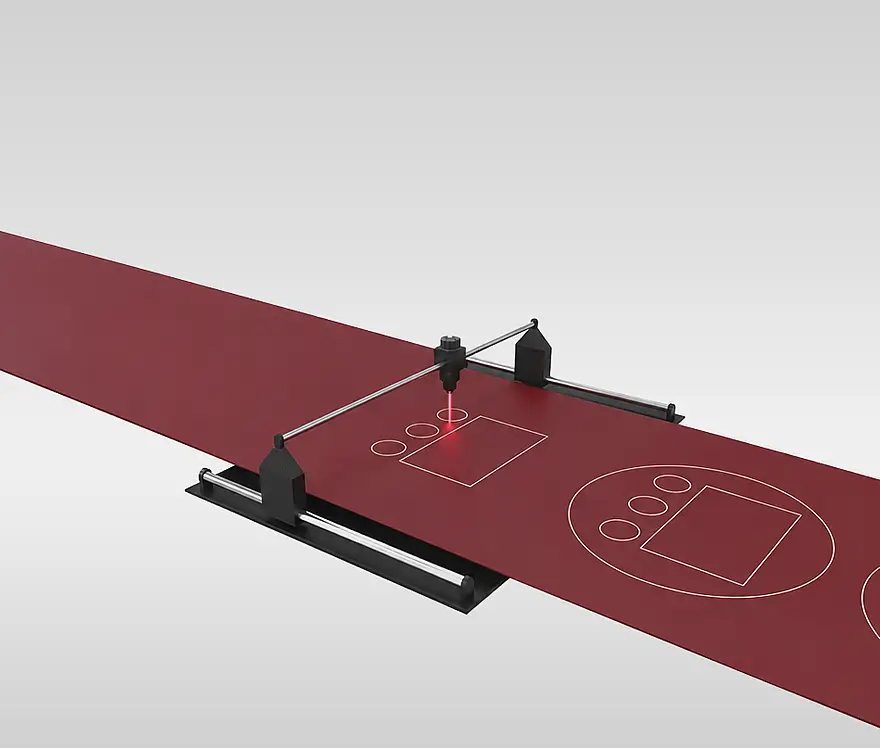
We laser cut suitable rubber into seal contours, pads, strips and shaped parts. Digital contours can be produced without a shaped die; we assess the material, cut edge and delivery format for your application.
No shaped die
Contours from digital data
Material assessment
Check suitability and cut edge
01
Processing rubber by laser
When is laser cutting suitable for rubber?
In rubber laser cutting, a laser beam follows a specified contour. Suitable starting material can become flat seal contours, pads, strips and shaped parts without first making a shaped die. This is an option to assess for samples, changing contours and small production runs.
The shape alone does not determine the process. Rubber compound, thickness, elasticity and thermal behaviour affect whether the material can be laser cut and what cut edge results. We therefore clarify the material and the part's function before production; for function-critical seals, a sample can help assess fit and edge quality.
If another process or delivery format is needed, we compare the laser cut with rubber die cutting. Our rubber processing page outlines further options for this material group.
02
From rubber stock to cut part
Step 01
Send your requirements
State the application, rubber grade, contour, dimensions, quantity and delivery format; a drawing or sample helps us assess them.
Step 02
Assess material and contour
We assess laser suitability, cut edge, geometry and the requirements for sealing or protective function.
Step 03
Agree the format
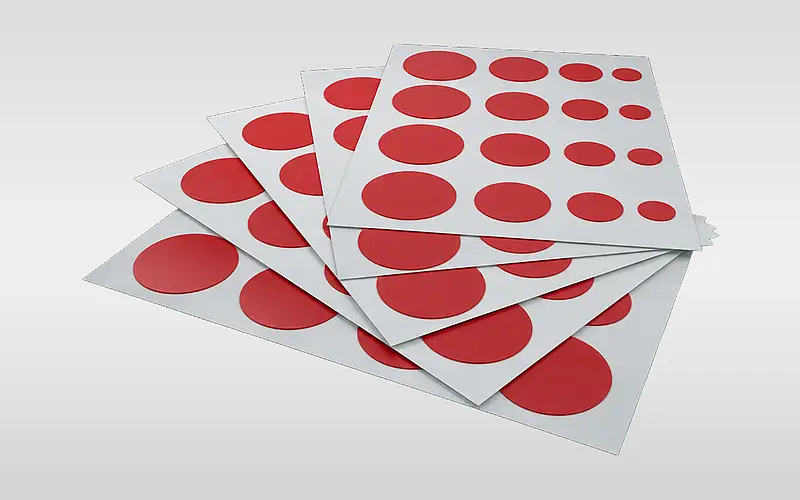
Where useful, we agree a sample, edge appearance and supply as individual parts or on a carrier with you.
Step 04
Produce the cut parts
After approval, we produce the agreed rubber cut parts in the specified shape and delivery format.
03
Contour and process options
Outer contours and shaped parts
The laser follows a digital outer contour for flat cut parts. We first check whether the rubber compound and required edge are suitable. Enquire about a shaped part →Inner cut-outs and rings
In suitable material, inner contours can form part of a seal or shaped part. Dimensions and cut quality are assessed for the specific geometry. Enquire about an inner cut-out →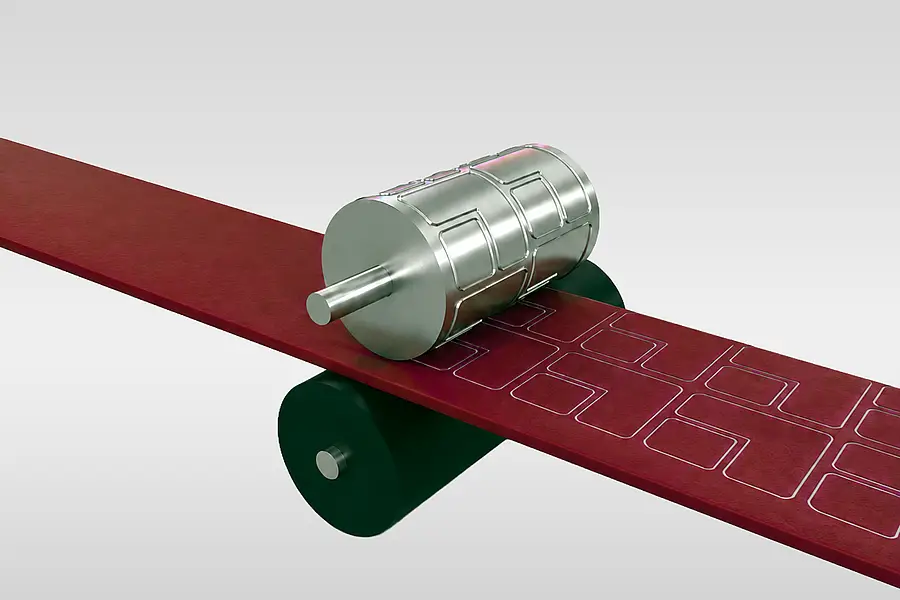
Die cutting as an alternative
If laser cutting gives an unsuitable edge, or quantity and format call for another approach, mechanical cutting may be appropriate. Explore rubber die cutting →04
Possible rubber cut parts
Pads on sheets
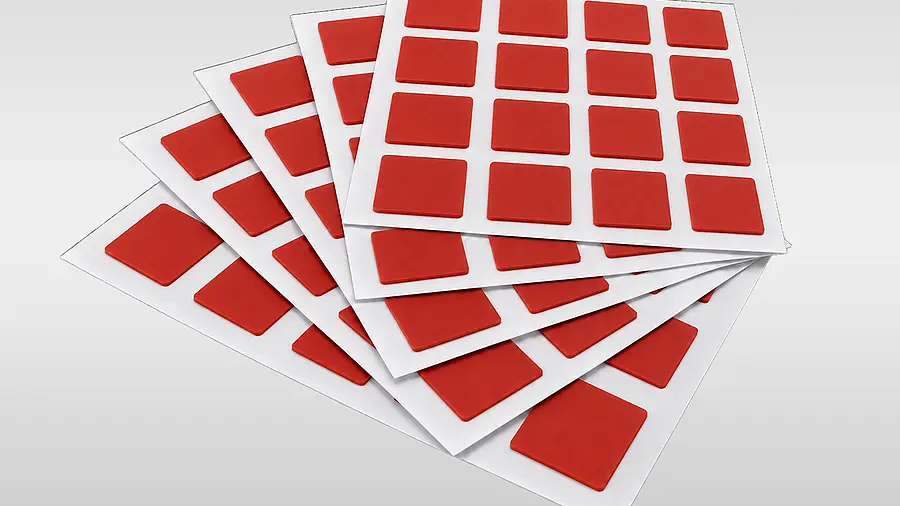
Rectangular pads are one possible shape. The image is an example; material, laser suitability and delivery format are set for your application. Enquire about pads →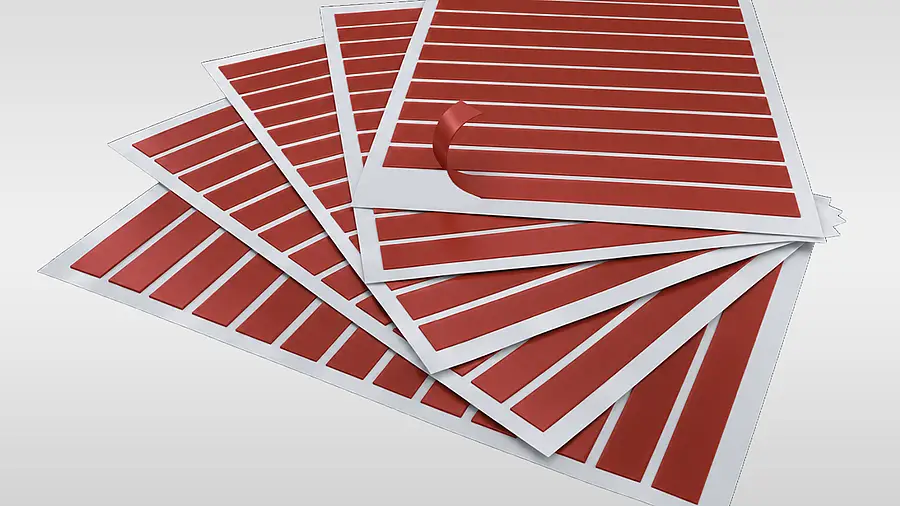
Strips on a carrier
You can enquire about strips in a specified contour and arrangement. We will assess whether the shown carrier format suits your material. Enquire about strips →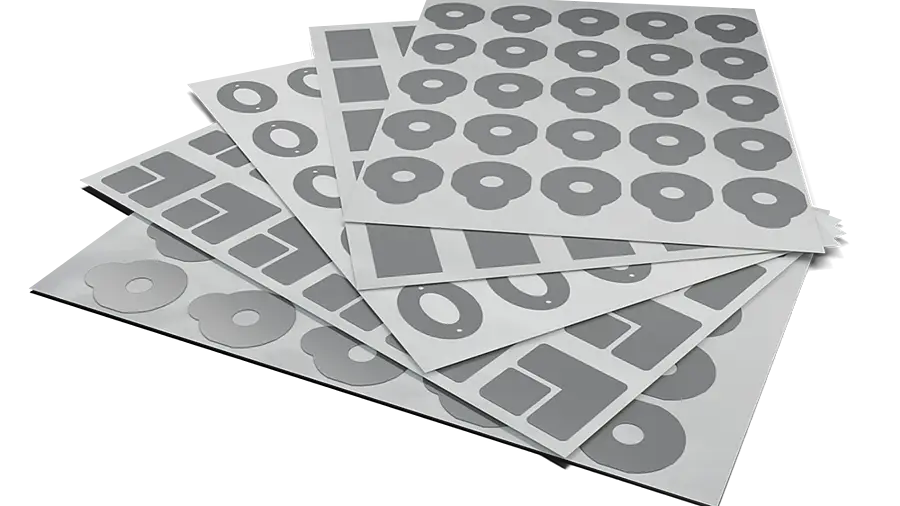
Seal and inner contours
Flat contours with an inner cut-out are possible if the rubber compound, geometry and required cut edge are suitable. Enquire about a seal contour →05
Rubber starting materials
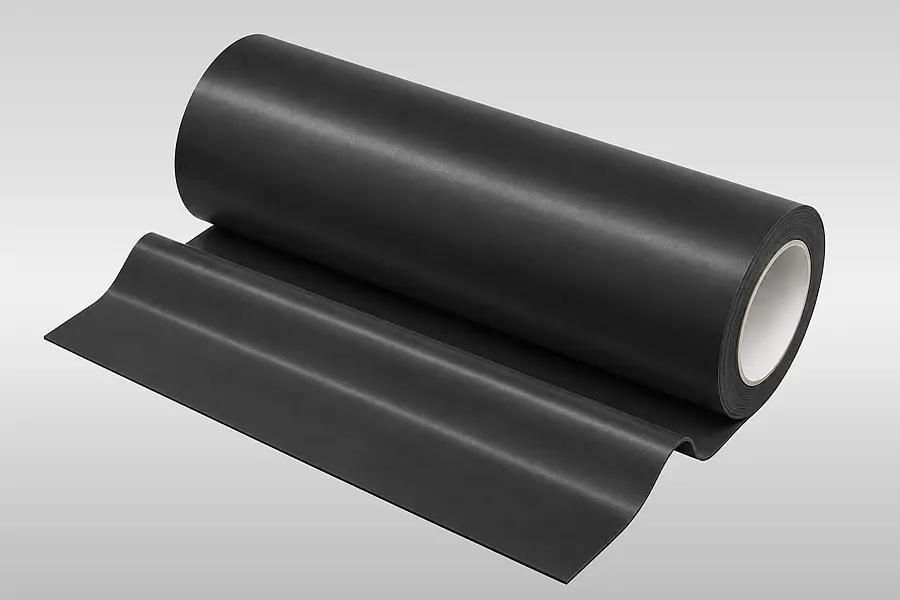
Rubber
Rubber webs and sheets may be starting materials. The specific compound and thickness determine laser suitability and edge quality.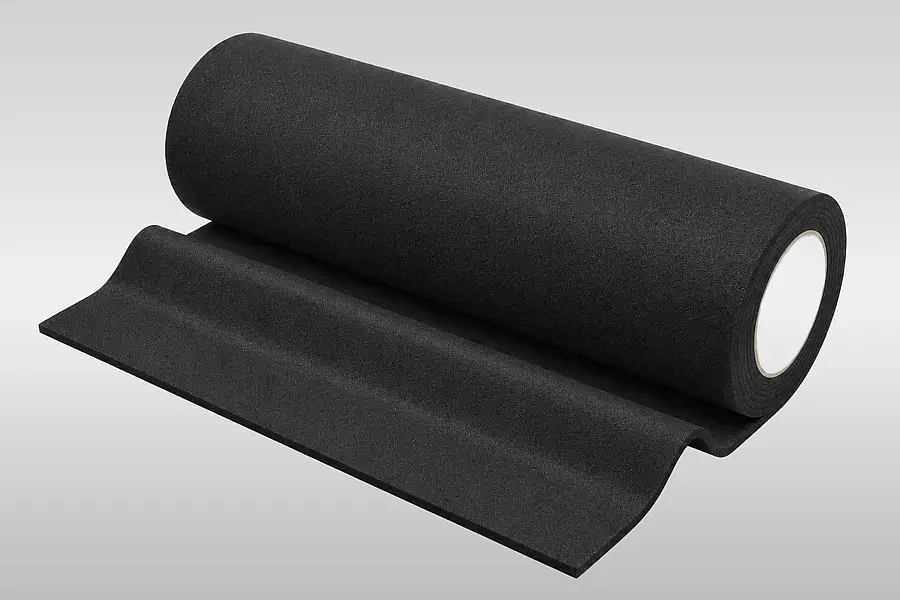
EPDM cellular rubber
EPDM cellular rubber is a separate material case. Its laser suitability and the required result must be assessed specifically. Explore EPDM Laser Cut →06
Laser cutting process
07
Criteria for choosing the process
| Assessment criterion | What it means for your cut part |
|---|---|
| Rubber compound | Its composition determines whether laser cutting and the required edge are feasible. |
| Thickness and elasticity | Both affect edge quality and dimensional accuracy; suitability is assessed on the actual material. |
| Contour and function | Outer or inner contour, sealing function and required edge shape determine the appropriate format. |
| Delivery format | Individual parts or an arrangement on a carrier are agreed to suit subsequent processing. |
Subject to material assessment
08
Details for your rubber laser cutting enquiry
Describe where the rubber part will be used and what it needs to do. State the rubber grade or available starting material, its thickness, the required outer and inner contours, dimensions, quantity and delivery format. Requirements for the cut edge, sealing function and subsequent processing help us choose the process.
A drawing or sample is helpful but is not essential for an initial enquiry. Send your details through the contact page; we will assess material and feasibility individually.
09
Questions about laser cutting rubber
How can an unknown rubber compound be assessed for laser cutting?
By examining the actual starting material and required cut edge. Rubber compounds differ in composition, elasticity and thermal behaviour. For an enquiry, the material designation, thickness and intended function are helpful. If the edge or dimensional accuracy is especially important, a sample can be agreed as a decision aid. We cannot make a blanket promise for every rubber grade.
When is rubber die cutting a better option?
When the material does not produce a suitable laser cut edge or mechanical cutting is better suited to the contour, quantity and delivery format. Die cutting requires a shaped tool, while the laser follows digital data. The comparison therefore depends on your part and starting material. The rubber die cutting page explains the mechanical option.
Can a laser cut rubber part be used as a seal?
Yes, a flat seal contour is a possible result if the material, cut edge and geometry suit the sealing task. Cutting does not create additional material properties. Please tell us about the installation situation, contact media and edge requirements. For a function-critical application, the intended performance and a sample should be assessed before production.
Which delivery formats are possible for rubber cut parts?
Individual parts or an agreed arrangement on a carrier may be possible, depending on the material and subsequent processing. The picture of sheeted parts is only a shape example, not a general promise. Tell us how the parts will be removed, positioned and assembled. We can then assess which format works for your workflow.
Enquire about your rubber cut parts
Send us the material details, contour, dimensions and desired delivery format. We will assess laser suitability and agree the approach for your part.

Advice on rubber cut parts
Thomas Klein
Contact for converting
Thomas Klein will discuss the material, contour and suitable delivery format with you.