

CUSTOM SANDING BELT PRODUCTION
Sanding belt manufacturer: belts made to measure
Krückemeyer GmbH makes sanding belts from suitable coated abrasives in widths and lengths tailored to the application. The abrasive, machine, belt joint and required sanding result determine the design.
6–610 mm
documented width range
283–16.500 mm
documented length range
45°–90°
joint angle
01
SANDING BELT PRODUCTION
From coated abrasive to a belt suited to your application
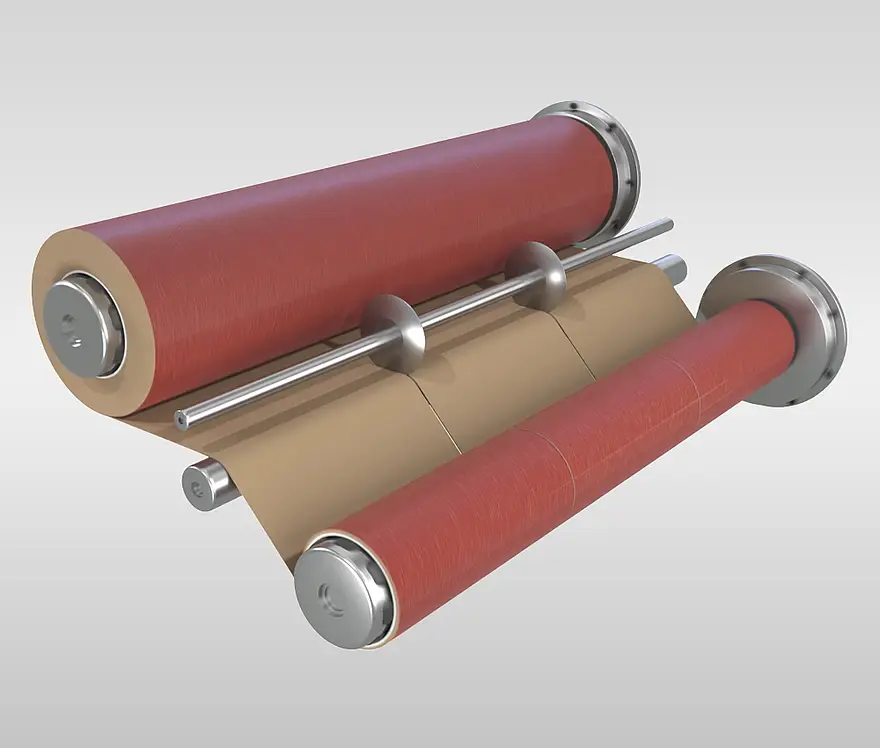
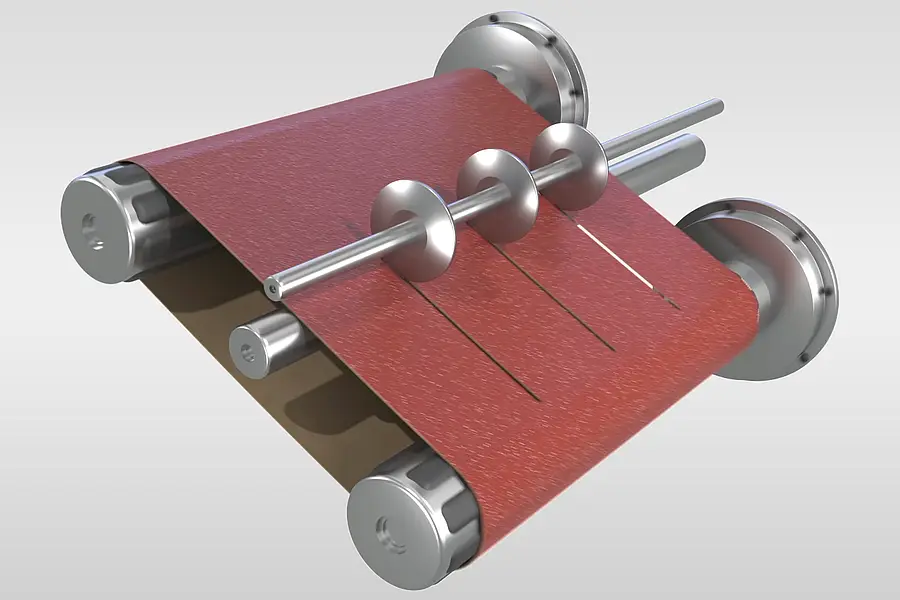
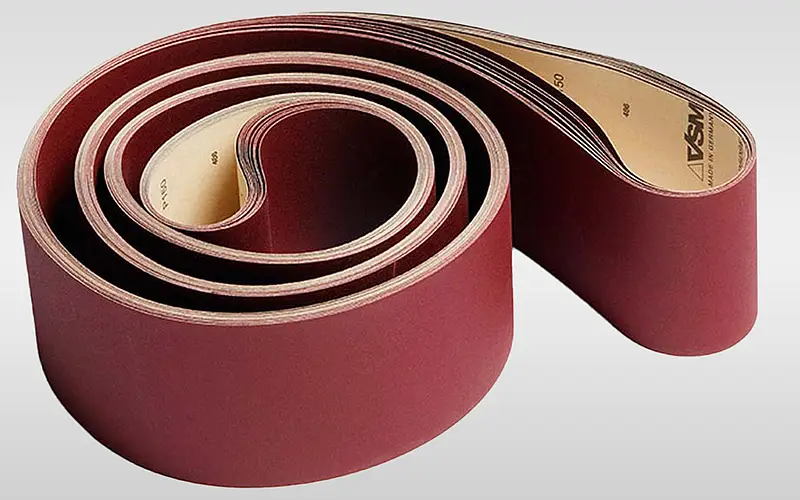
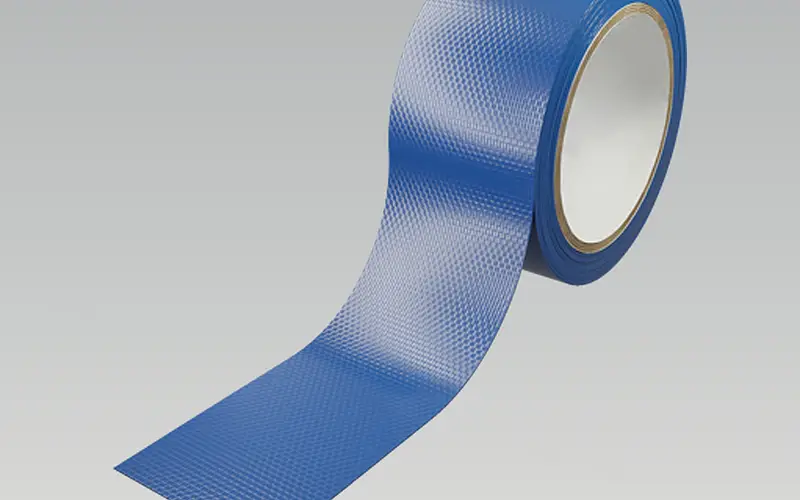
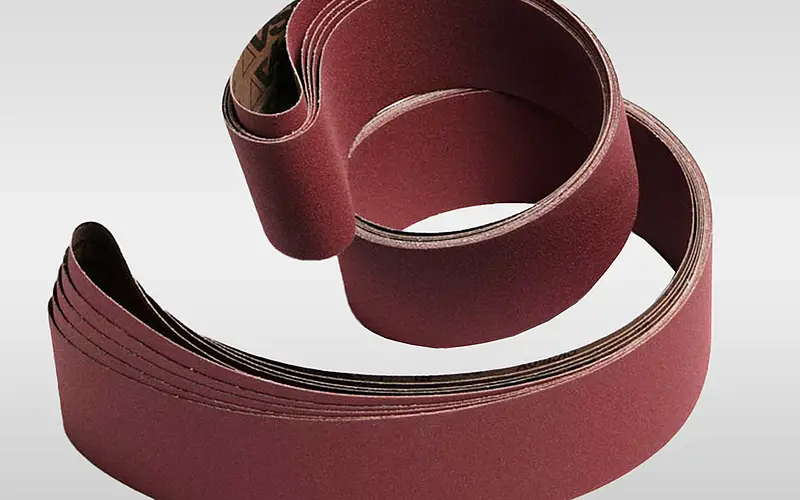
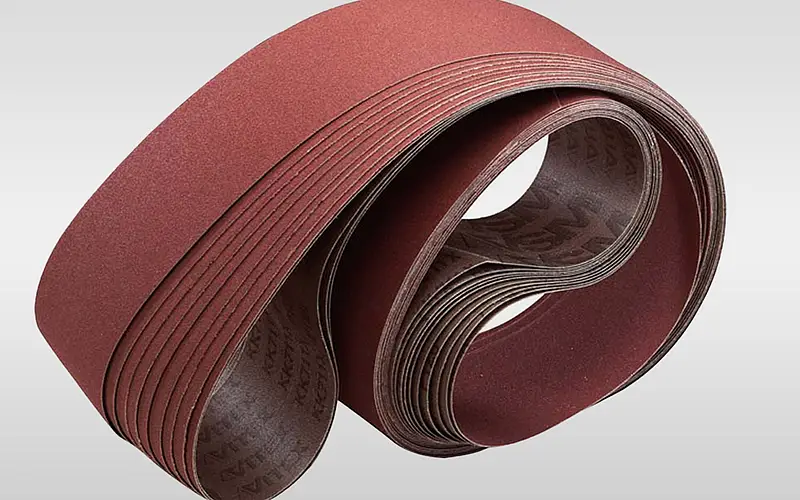
To make a sanding belt, a suitable coated abrasive is cut to the required width and length and joined to form an endless belt. Krückemeyer processes abrasive paper, abrasive cloth, nonwoven abrasive material and film backed abrasives. The choice of material depends on the workpiece, machine and desired finish.
For a conventional bonded joint, the belt ends meet edge to edge: the back is abraded, adhesive and joint tape are applied to the back, and the joint is pressed. Straight cuts and wave cuts are possible. Joint tensile strength is checked by sampling each production batch.
The documented overall range is 6–610 mm in belt width and 283–16.500 mm in belt length. The extremes cannot be combined at will; we assess the specific design using your abrasive, dimensions and application. If the belt specification is already set, see sanding belt cutting for that process.
02
FROM ENQUIRY TO SANDING BELT
Step 01
State the application and dimensions
Describe your machine, workpiece, sanding objective and required belt width and length.
Step 02
Assess material and joint
We assess the material group, required geometry and a suitable belt joint for the specific combination.
Step 03
Agree the design
The belt form, backing and joint are agreed for the application; a sample or drawing helps with assessment.
Step 04
Make and check the belt
The abrasive is cut and joined. Joint tensile strength is checked by sampling each production batch.
03
BELT AND JOINT OPTIONS
Straight cut joint
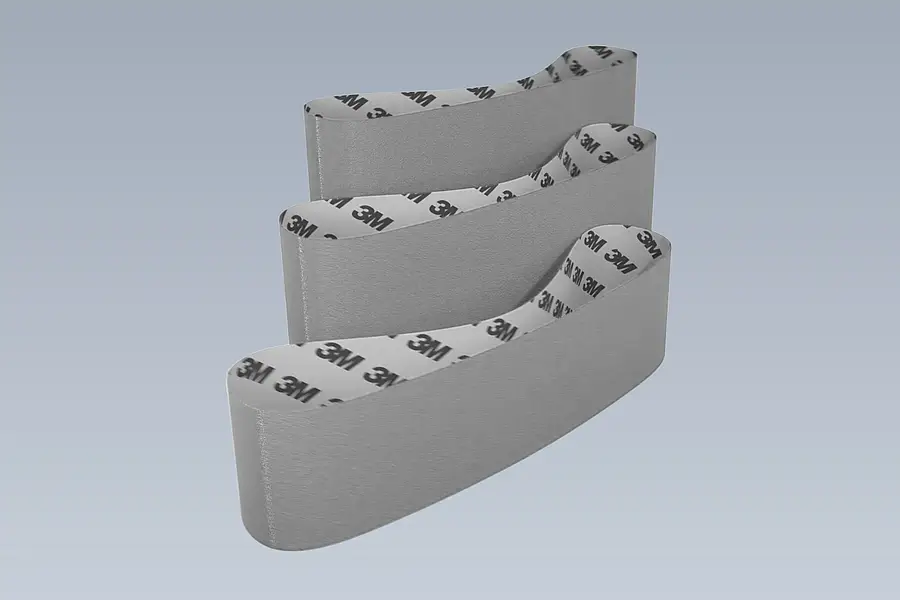
For a conventional bonded belt, the ends are joined edge to edge with joint tape on the back; a straight cut is possible. Ask about a belt joint →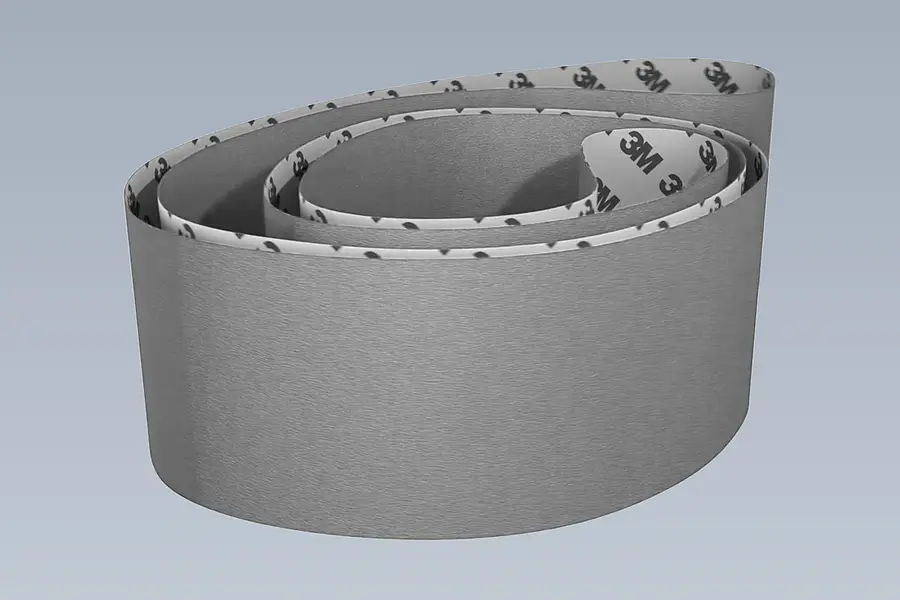
Wave cut
A wave cut is a confirmed joint form. We assess its suitability and angle for the abrasive and application. Ask about a wave cut →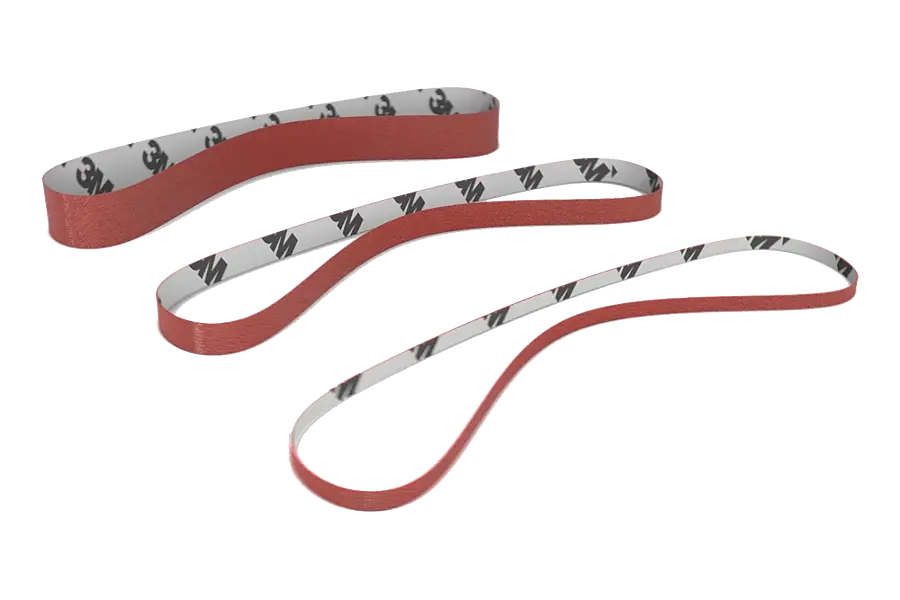
Belt width and length
Width and length are set by the machine and sanding task. Cutting belts to an existing specification is covered on a separate process page. Explore belt cutting →04
POSSIBLE BELT DESIGNS
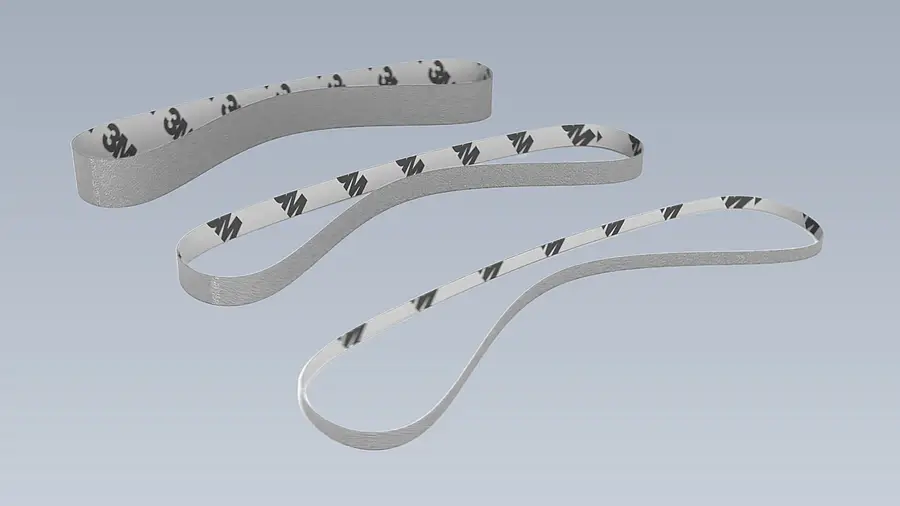
File belt
Narrow closed sanding belts are a possible supplied design when specified by the machine and sanding task. Enquire about file belts →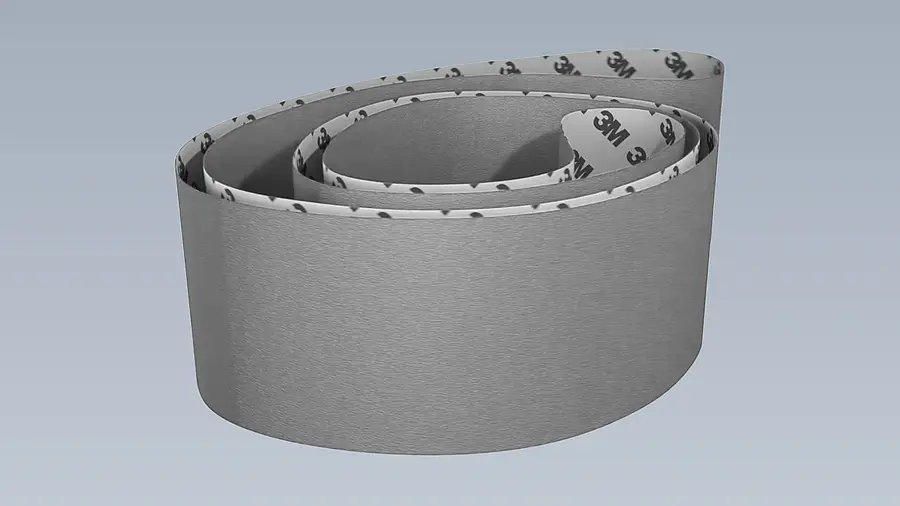
Long belt
Long sanding belts can be made for suitable machines and tasks; dimensions and joint are assessed together. Enquire about long belts →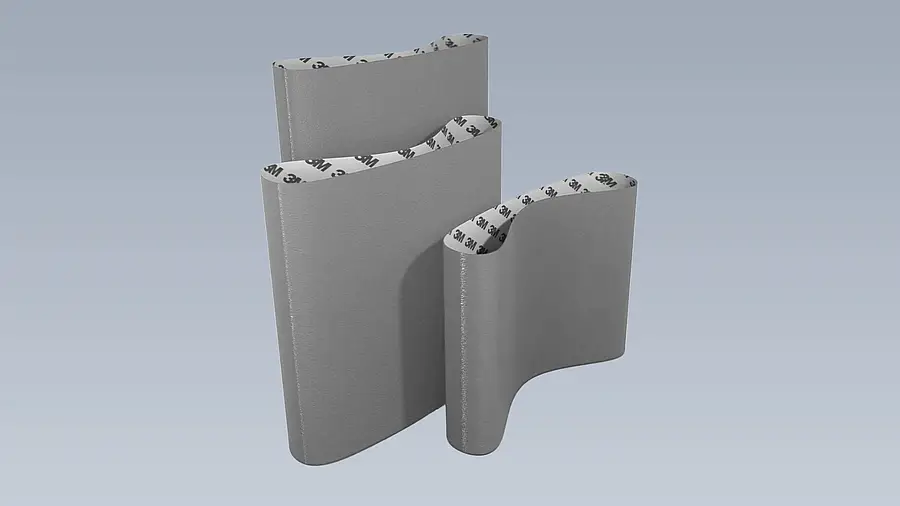
Wide belt
A wide sanding belt is another confirmed design. The specific width depends on the material and machine. Enquire about wide belts →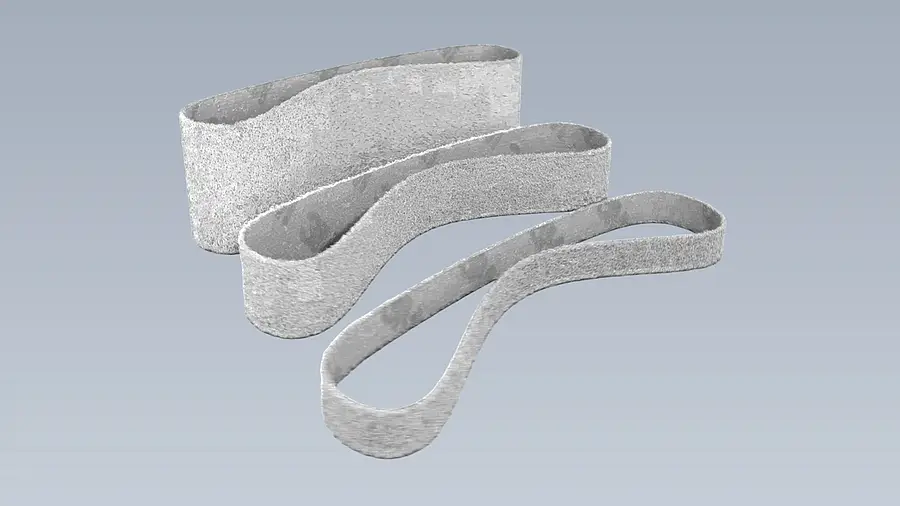
Nonwoven belt
Nonwoven abrasive material can be made into belts of individual widths and lengths when suited to the machine and application. Enquire about nonwoven belts →05
SUITABLE STARTING MATERIALS
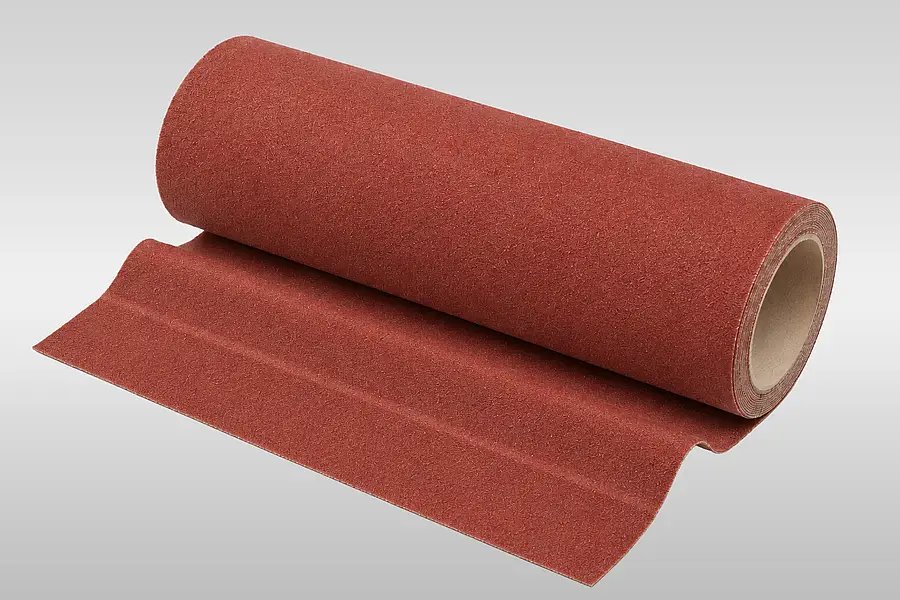
Abrasive cloth
Cloth is a confirmed starting material for coated abrasive belts. Backing and grit are selected for the sanding process. Ask about abrasive cloth →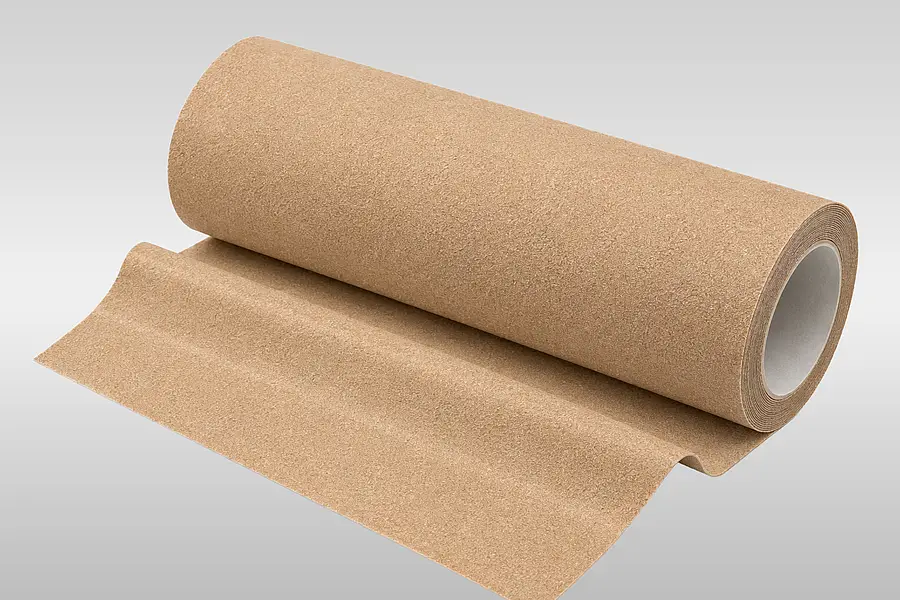
Abrasive paper
Abrasive paper can be processed as a starting material. We assess belt suitability for the machine and application. Ask about abrasive paper →
Film backed abrasive
Film backed abrasives are among the confirmed starting materials. The dimensions and joint must suit the application. Ask about film backing →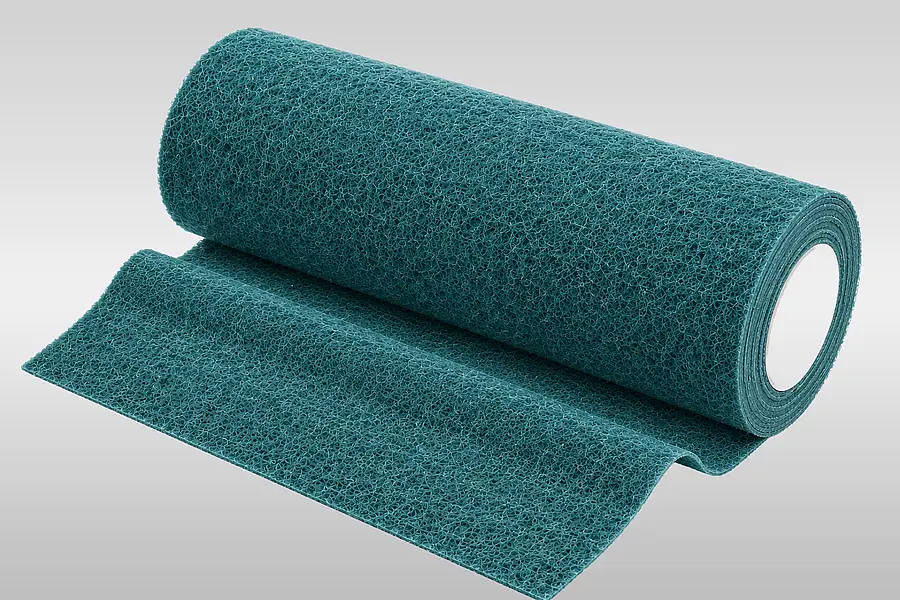
Nonwoven abrasive
Nonwoven material can be converted into individual widths and lengths. Suitability and design depend on the sanding process. Ask about nonwoven material →06
BELT PRODUCTION IN PICTURES
07
TECHNICAL DECISION GUIDE
| Feature | Documented range | Check for your enquiry |
|---|---|---|
| Belt width | 6–610 mm | Machine, starting material and required length |
| Belt length | 283–16.500 mm | Machine, starting material and required width |
| Joint angle | 45°–90° | Required joint geometry |
| Joint shape | Straight cut or wave cut | Suitability for the abrasive and application |
The limits cannot be combined at will.
08
DETAILS FOR YOUR SANDING BELT ENQUIRY
Tell us the sanding machine and required belt dimensions, as well as the workpiece, task and intended sanding result. If the starting material is already specified, include its material group, backing and grit. Please also state your requirements for the belt joint, the desired supplied form and the quantity needed.
A drawing, sample or designation of the belt currently used can help with specification. If dimensions or abrasive material are still open, start by describing the application; Krückemeyer will assess a suitable design and the feasibility of the particular combination with you.
09
QUESTIONS ABOUT SANDING BELT PRODUCTION
Which materials can be made into sanding belts?
Krückemeyer processes abrasive paper, abrasive cloth, nonwoven abrasive material and film backed abrasives as starting materials. Which group suits your sanding belt depends on the machine, workpiece and desired machining result. The material choice is therefore agreed for the specific application.
How is a bonded sanding belt joint made?
A conventional bonded belt has an edge to edge joint. The back is abraded, adhesive and joint tape are applied to the back, and the joint is pressed. Straight cuts and wave cuts are possible. Joint angle and joint tape are separate parameters that are specified for the design.
Can the largest belt dimensions be combined?
No. The documented overall ranges of 6–610 mm in width and 283–16.500 mm in length do not mean that their limits can be freely combined. Krückemeyer assesses the required width and length together with the abrasive, backing, machine and joint for the specific belt enquiry.
What details help with an enquiry for custom sanding belts?
Useful details are the sanding machine, required belt width and length, workpiece and task, and the quantity needed. If known, state the abrasive material, backing, grit and joint requirements. A drawing or sample can help with specification; missing details can be clarified from your application.
Enquire about a sanding belt for your application
Send us your machine, belt dimensions and sanding task. We will assess the starting material, design and production options for the finish you need.

ABRASIVE TECHNOLOGY ADVICE
Jürgen Müller
Contact for converting
Jürgen Müller advises on sanding belt production and assesses the abrasive, dimensions and joint for your application.