

Adhesive tape converting
Adhesive tape die cutting for application-ready parts
Single-sided or double-sided adhesive tape can be converted into die-cut parts with contours and delivery formats suited to your component and assembly process. We review the material, geometry and handling requirements with you.
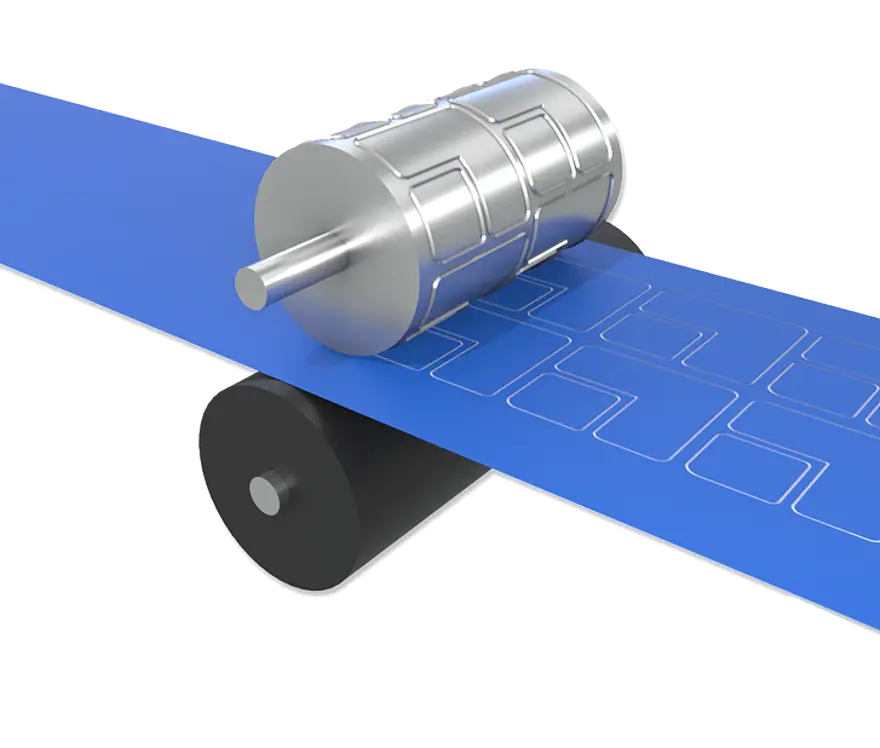
Kiss cut
Liner can remain intact
Die cut
Specified layers separated
Roll · sheet
Format follows the process
01
Adhesive tape die cutting
From adhesive tape to a part suited to your application
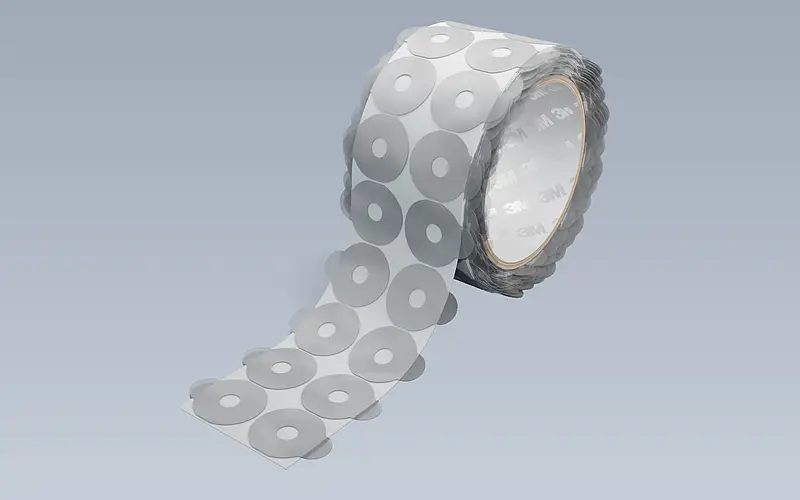
Die cutting gives a suitable adhesive tape a defined contour. The result may be an adhesive dot, pad, strip or shaped part with an internal cut-out. Its shape follows the component and the point at which the part will later be applied.
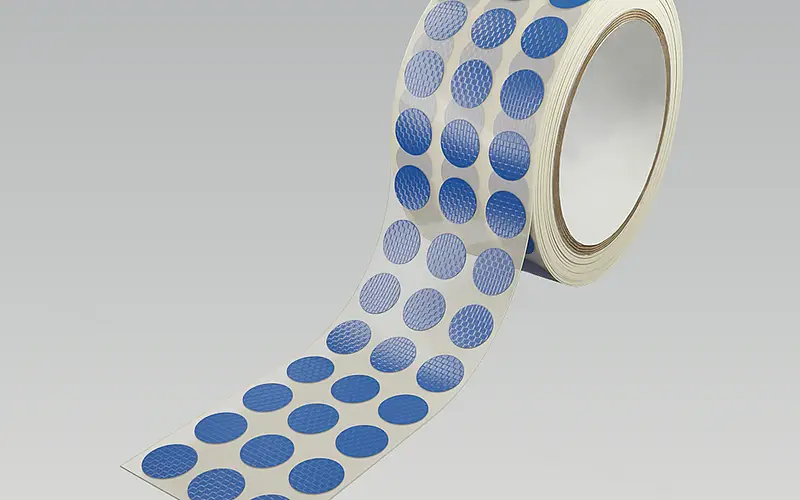
The outer contour is only part of the decision. With kiss cutting, the specified layers are cut while the liner can remain intact as a carrier. A full die cut separates the intended layers and can produce individual parts. Finger lifts, pull tabs and positioning aids can support handling.
We align the starting material, contour, layer separation and delivery format with your application. We check whether a particular tape and geometry are suitable for the requested format in each case.
02
How we develop your tape die-cut part
Step 01
Describe the application and material
Tell us about the component, adhesive tape and required function. A drawing or sample makes the contour easier to assess.
Step 02
Check the material and contour
We assess whether the material, layer structure, shape and requested format work together. Critical geometries and liner requirements are clarified.
Step 03
Agree on the delivery format
Together we determine whether a roll, sheet or individual parts suit your handling process. Pull and positioning aids can also be discussed.
Step 04
Produce the die-cut parts
Once the design is agreed, a suitable method is used for the tape and contour. The parts are provided in the agreed format.
03
Die-cutting methods for tape
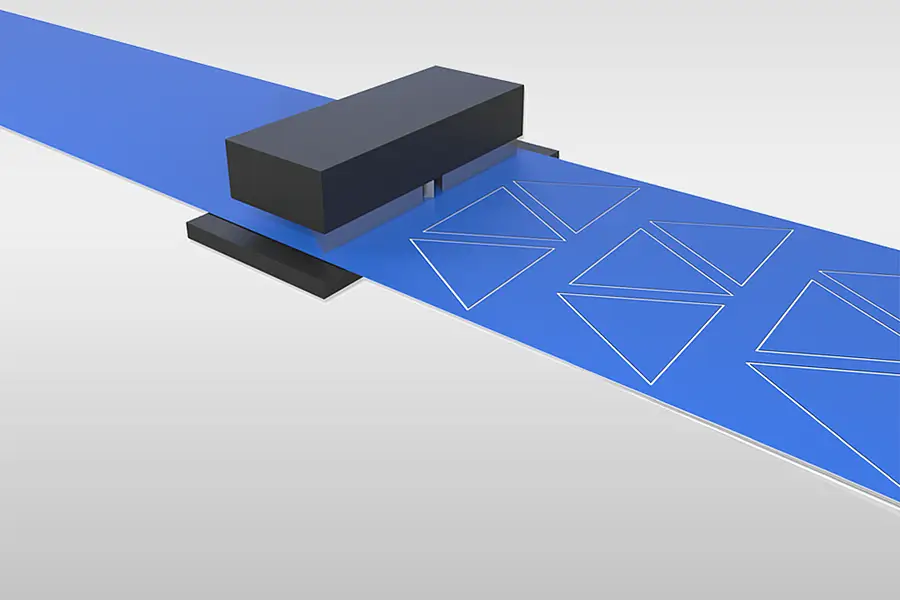
Flatbed die cutting
A tool cuts the specified contour in a press stroke. The method is assessed for the shape, starting material and required format.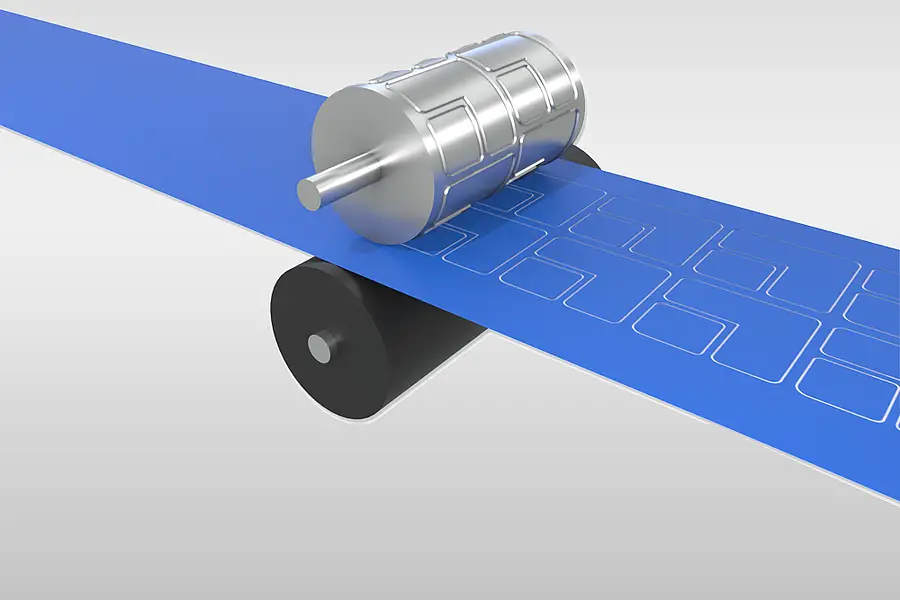
Rotary die cutting
Continuous die cutting feeds tape material past a rotating tool. The choice depends on the contour and production task. Explore rotary die cutting →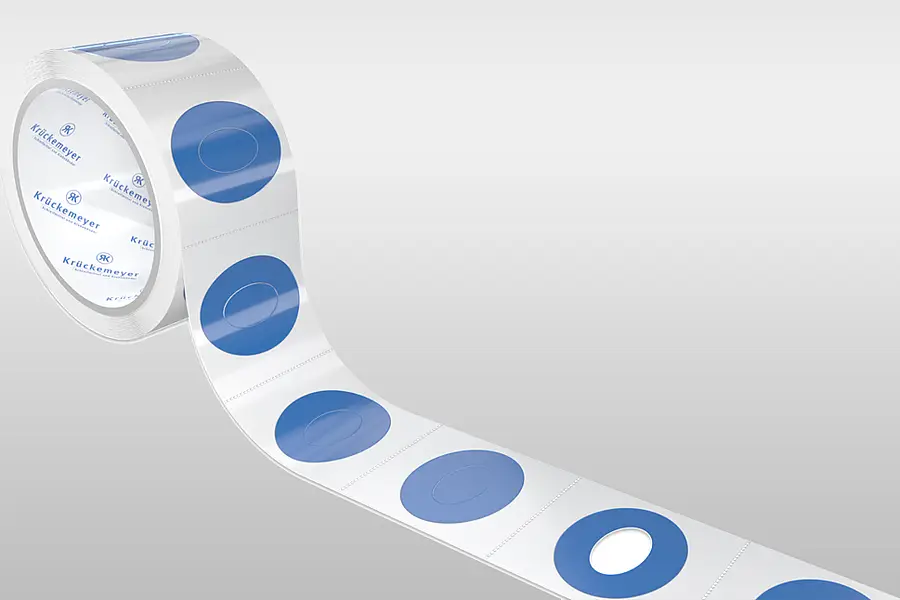
Kiss cutting
The cutting depth is set for the specified layers. Die-cut parts can remain on an intact liner. Explore kiss cutting →04
Possible adhesive tape die-cut parts
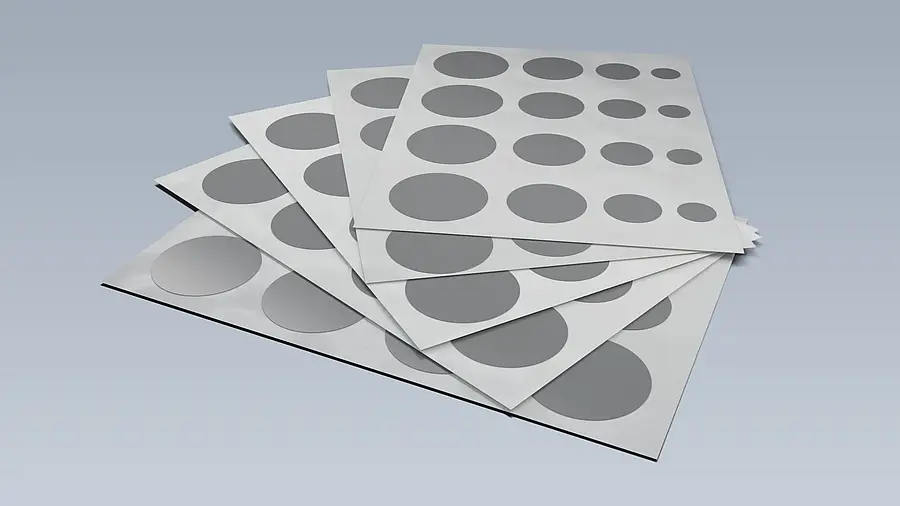
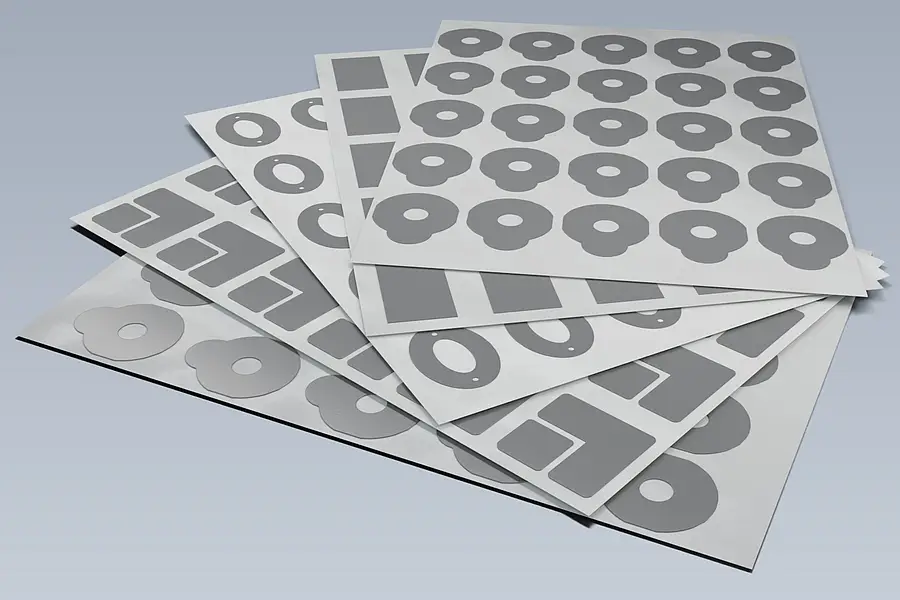
Adhesive dots on sheets
Small die-cut parts can be arranged on a sheet. Their shape and placement follow the intended application. Enquire about adhesive dots →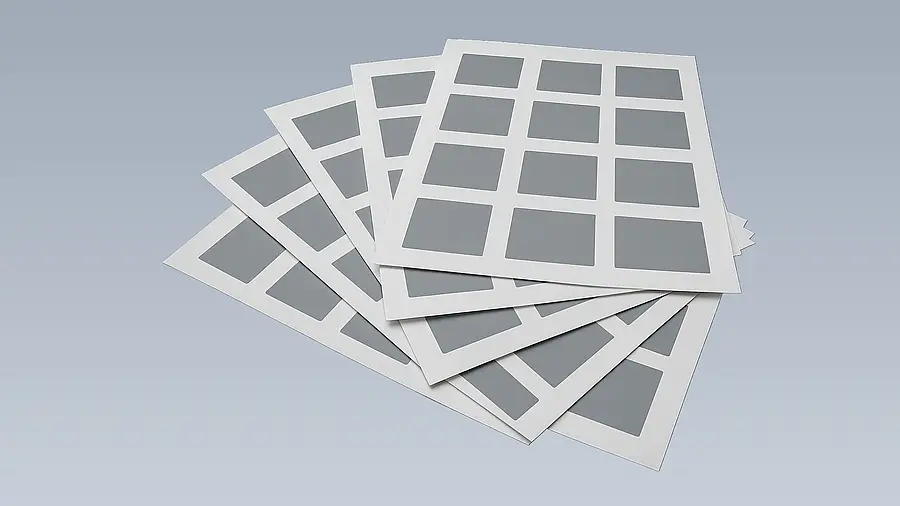
Adhesive pads on sheets
Pads are supplied with an agreed contour and carrier. Dimensions and handling are checked against the component. Enquire about adhesive pads →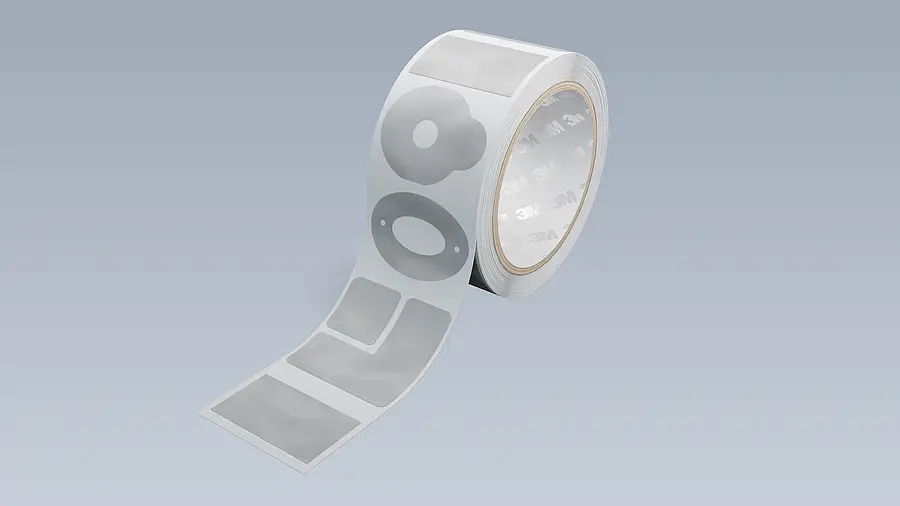
Shaped parts on rolls
Repeated contours can be arranged on a roll where the material and application process allow it. Enquire about shaped parts →05
Suitable tape groups
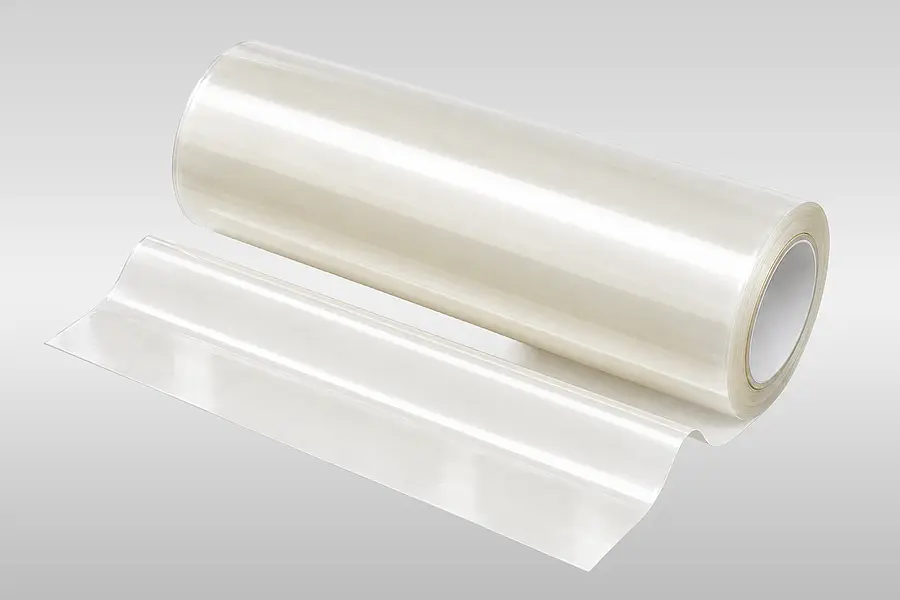
Single-sided adhesive tapes
Suitable film, fabric, paper or foam tapes can serve as starting materials. The carrier and contour must suit die cutting. Explore adhesive tapes →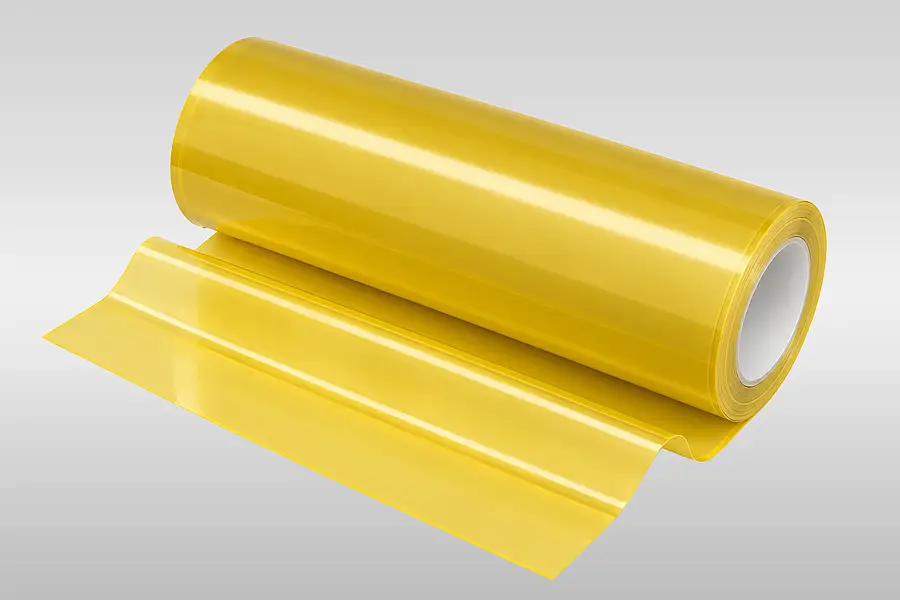
Double-sided adhesive tapes
Film, nonwoven, fabric, foam or transfer constructions may be suitable depending on the application. The liner and layer separation are part of the design. Explore double-sided tapes →06
Rotary die cutting of adhesive tape
07
Choosing a die-cutting method
| Method | Key selection question | Possible format |
|---|---|---|
| Flatbed die cutting | Assess contour, material and layer structure | Shaped part with agreed geometry |
| Rotary die cutting | Assess tape stock and continuous processing | Die-cut parts on a roll, subject to review |
| Kiss cutting | Define which layers and liner should be cut | Die-cut parts on an intact carrier |
Check suitability per project
08
Details for your die-cutting enquiry
Describe the component and the intended result. Tell us which adhesive tape you plan to use, or which material function you need, together with the contour, dimensions, layer structure and intended separation of tape and liner.
The quantity, the preferred format on a roll, on a sheet or as individual parts, and the planned manual or automated application also help us assess the design. A drawing or sample can clarify the shape, internal cut-outs and any pull or positioning aids.
09
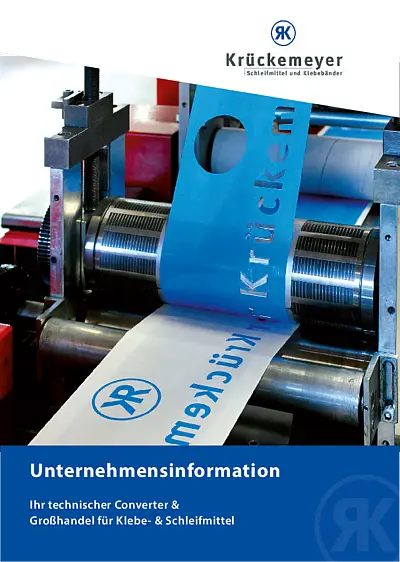
About our converting capabilities
10
Questions about tape die cutting
Can the liner remain intact during adhesive tape die cutting?
Yes. Kiss cutting can cut the adhesive tape while leaving the specified carrier intact. In multi-layer constructions, the intended separation of each layer, including the liner, must be defined. We therefore need details of the actual material and how you plan to remove and apply the parts.
What determines whether parts are supplied on rolls, sheets or individually?
The choice depends on the material, geometry and your application process. Parts on a roll can be arranged for continuous processing, while sheets can carry different formats. Fully die-cut individual parts are another option. The suitable format is checked against your handling requirements.
Can adhesive tape die-cut parts have internal cut-outs?
Yes, internal cut-outs are possible in adhesive tape die-cut parts. We check whether we can make them for your contour, chosen tape and requested delivery format by reviewing the actual design. Please send us a drawing or sample if available.
When are finger lifts or pull tabs useful?
They can make it easier to remove and position a die-cut part. The size and position of the non-adhesive grip area are designed around the material, component and handling method. Let us know whether the parts will be applied manually, semi-automatically or automatically.
Can every adhesive tape be die cut?
We check whether the particular adhesive tape is suitable for your requested contour. Paper, nonwoven, fabric, foam, acrylic foam and film tapes, as well as transfer adhesive films, may be used as starting materials. We assess whether the required geometry and delivery format can be made from them for your application. Please send us details of the material and layer structure, together with a drawing or sample if available.
Enquire about die-cut parts for your component
Send us your application, the required contour and your planned assembly method. We will review the material and suitable format with you.

Adhesive technology advice
Thomas Klein
Contact for converting
Thomas Klein can discuss the adhesive tape, contour and delivery format for your die-cut part with you.