

DIE CUTTING · SELECTIVE LAYER CUTTING
Kiss cutting: die-cut parts on a carrier
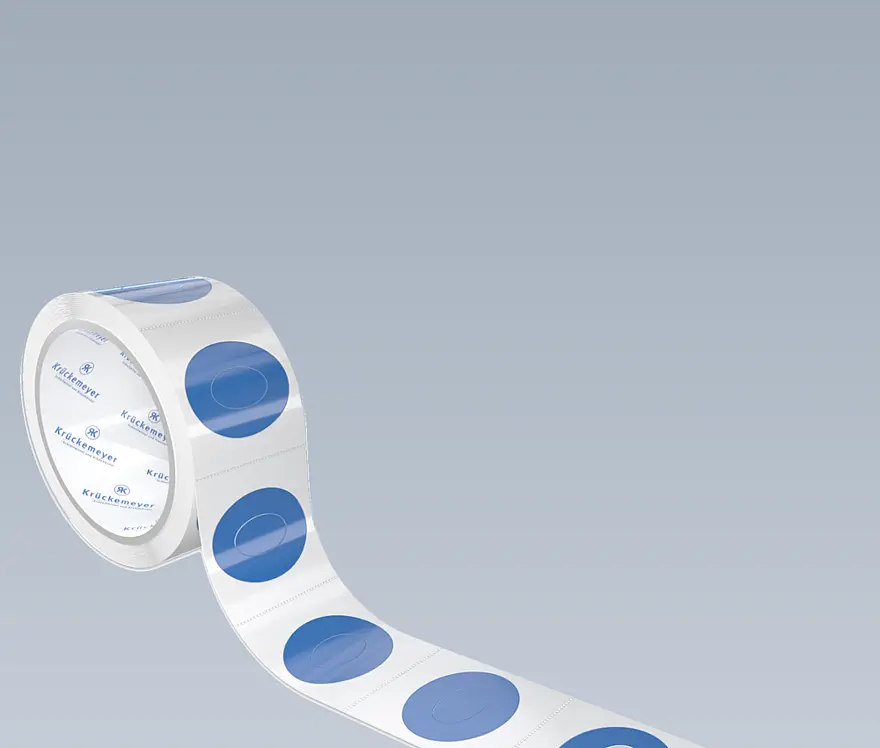
Kiss cutting cuts defined material layers while the intended carrier keeps the parts together. Krückemeyer GmbH aligns the contour, layer structure and delivery format with your downstream process.
01
KISS CUT AND CARRIER
What kiss cutting separates – and what remains together
Kiss cutting selectively separates chosen layers of a material or laminate. The required contour is cut into the specified layer, while another layer can remain as the carrier. The die-cut parts stay in a defined arrangement after cutting and can be prepared for subsequent removal.
For a multilayer structure, the layers to be separated and retained must be specified. The liner itself may also be processed layer by layer where the application calls for it. Kiss cutting therefore does not mean that the liner is always left untouched.
The contour alone does not determine the right solution. The starting material, layer structure, spacing of the parts, handling and delivery format also matter. We review these points with you before selecting the process and design.
02
YOUR KISS-CUT PROJECT
Step 01
Describe the application and layers
Tell us which layer is to be cut, which should remain, and how the parts will later be removed.
Step 02
Assess material and contour
We assess the starting material, layer structure, contour and required arrangement for a suitable cut and delivery format.
Step 03
Agree the configuration
We align the carrier, removal method and, if needed, a sample with your process; approval is arranged for the project.
Step 04
Produce the die-cut parts
After agreement, the specified layers are cut and the parts supplied in the agreed delivery format.
03
KISS-CUT FORMATS
Kiss cutting on rolls
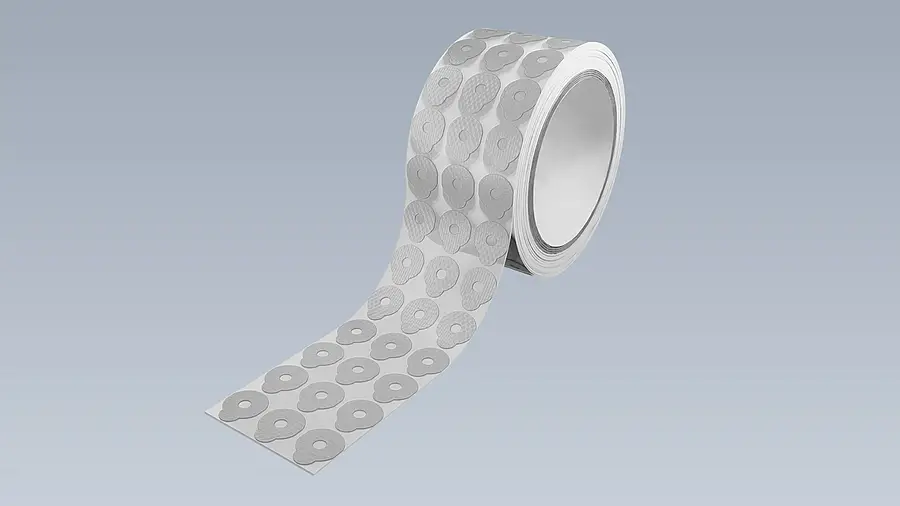
The cut parts remain in sequence on a carrier web. Their spacing and arrangement reflect the intended removal process. Explore rotary die cutting →Kiss cutting on sheets
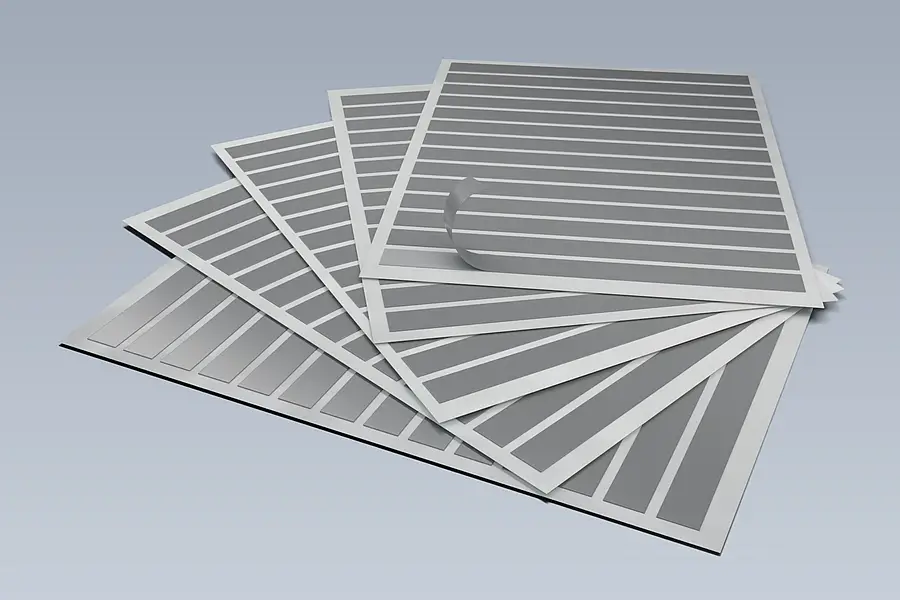
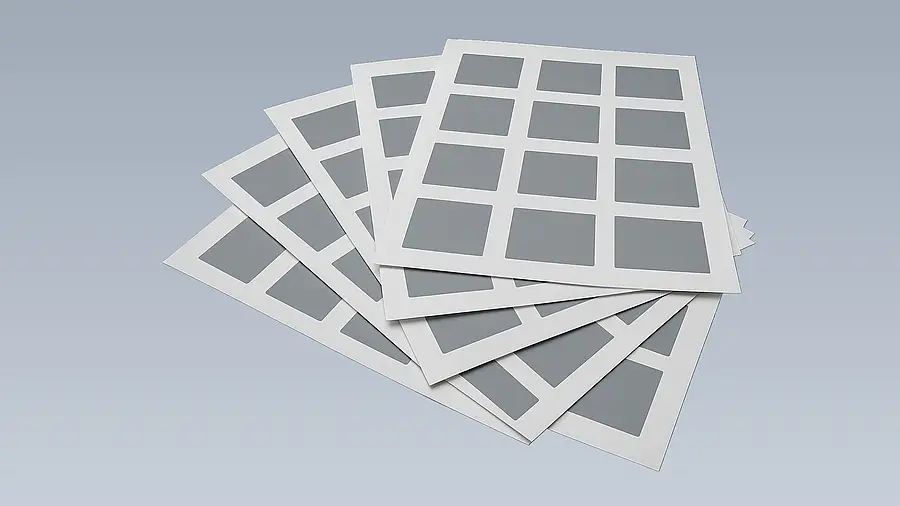
Multiple contours can be supplied as die-cut parts on a sheet. The design depends on the material and handling process. Explore flatbed die cutting →04
DIE-CUT PARTS AND DELIVERY
05
STARTING MATERIALS FOR KISS CUTTING
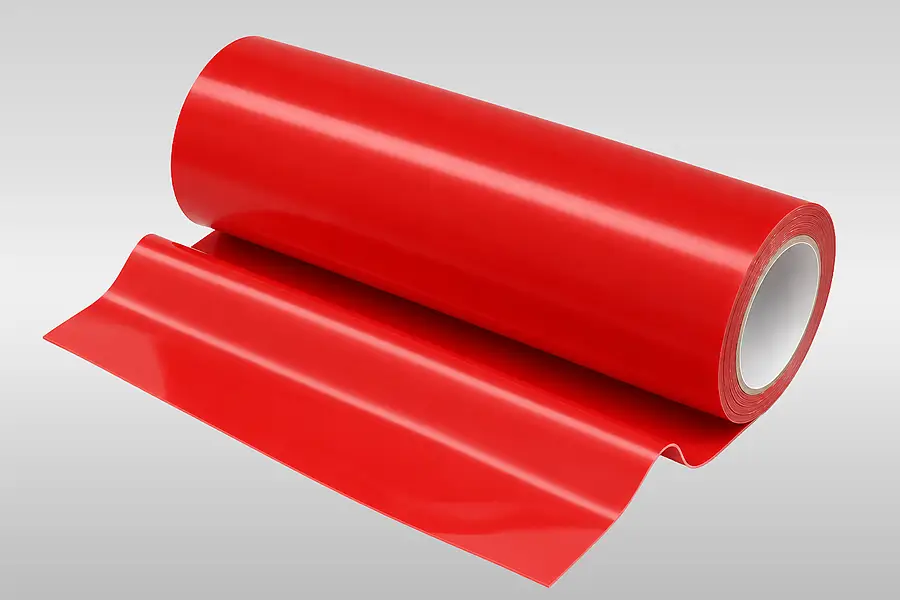
Adhesive tapes
Suitable single- or double-sided adhesive tapes can be cut by layer. The carrier and adhesive layer must be assessed for separation. Die cutting adhesive tape →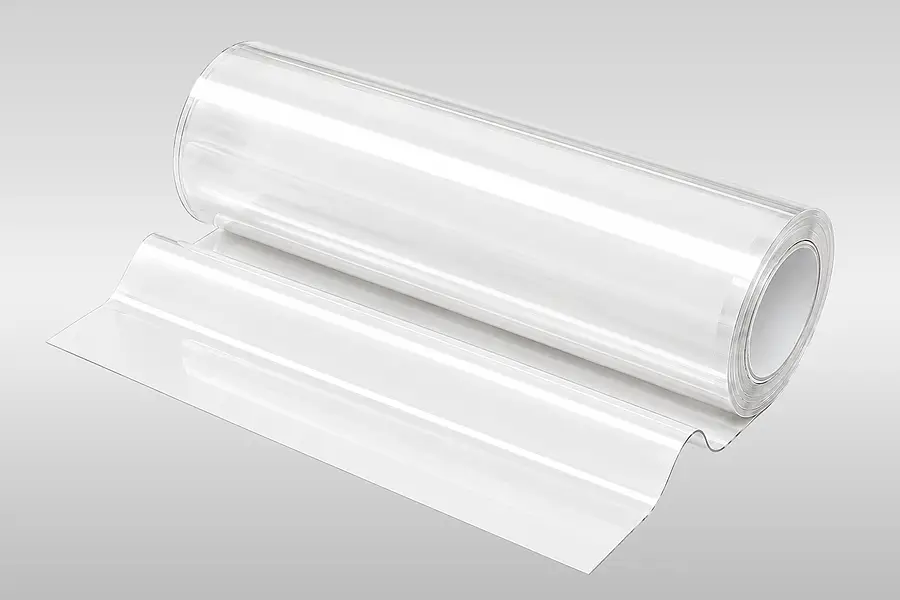
Technical films
Suitable films and film laminates can be starting materials. Suitability depends on the structure and required contour. Die cutting films →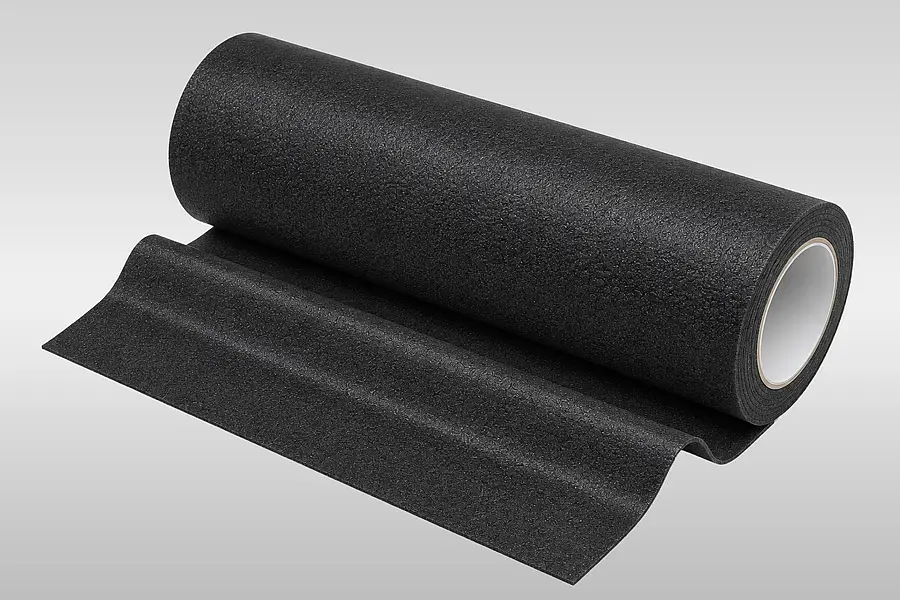
Foams
Suitable foams and foam tapes can be assessed as layers in a die-cut structure. Material thickness and contour matter. Die cutting foam →06
KISS CUTTING IN PICTURES
07
CHOOSING THE CUT
| Decision point | Kiss cut | What to clarify |
|---|---|---|
| Which layer is cut? | A defined layer or selection of layers receives the required contour. | Specify the layer structure and the layers to be cut. |
| What remains as a carrier? | A chosen layer can hold the parts together; the liner itself can also be processed by layer. | Define the carrier, removal method and handling. |
| Which delivery format fits? | Die-cut parts can be supplied on rolls or sheets. | Describe the arrangement, spacing and downstream process. |
Material, structure and contour are assessed for each project.
08
DETAILS FOR YOUR KISS-CUT ENQUIRY
Tell us about your application and intended result, the starting material and its layer structure, and which layer should be cut or retained. The contour, dimensions, arrangement of the parts, delivery format and required quantity help us select a suitable process.
A drawing or sample is useful if available. Please also describe whether the parts will be removed and applied manually, semi-automatically or automatically, and whether peel tabs or positioning aids are required.
09
QUESTIONS ABOUT KISS CUTTING
Does kiss cutting always leave the liner untouched?
No. Kiss cutting selectively separates chosen layers. In a multilayer structure, the liner itself may also be processed by layer. We determine which layer remains based on the material structure and intended removal process.
How does kiss cutting differ from a die cut through all layers?
With kiss cutting, selected layers or a carrier remain to hold the parts together. With a full die cut, the specified layers are fully separated; cutting through the complete structure can produce individual parts. The right choice depends on which layers your application needs separated.
Can kiss-cut parts be supplied on rolls or sheets?
Yes. Both delivery formats are possible for die-cut parts. The choice depends on material, contour, arrangement and the intended removal method. Please tell us whether the parts will be processed manually, semi-automatically or automatically.
What information helps assess a kiss-cut project?
The material structure, layer to be cut, required contour, dimensions, quantity and delivery format are the main starting points. A drawing or sample adds detail. Information about part removal and any peel tabs also helps us define the design.
Can surplus material be removed after cutting?
Yes. In a suitable design, the waste matrix around the die-cut parts can be stripped away. Whether this works for a particular structure depends on the material, contour and web widths, among other factors. Matrix removal is therefore specified for the project.
Enquire about kiss-cut parts for your application
Send us the layer structure, required contour and delivery format. We will assess how the parts can be supplied on a carrier for your process.

KISS-CUT CONSULTATION
Thomas Klein
Contact for converting
Thomas Klein will discuss the layer structure, contour and delivery format of your die-cut parts with you.