

Technical Cleanliness: Cleanroom Production and Optical Metrology
Controlled production and agreed inspection for your application
Technical cleanliness starts with the right production environment and clear requirements for the component. Krückemeyer GmbH offers ISO 9 cleanroom production and optical metrology by agreement. We determine which processing and inspection steps make sense based on the material, geometry and desired result.
ISO 9 cleanroom — ISO 9 describes particle counts and particle sizes in the production area, not the cleanliness of an individual product.
01
Technical cleanliness
What technical cleanliness means in production
Here, technical cleanliness means aligning the starting material, production environment and inspection with the requirements of your application. It is not a blanket property of any die-cut part or adhesive tape. The cleanroom class categorises particle counts by particle size in the production area; requirements and evidence for the individual product must be defined separately.
Suitable films, adhesive tapes and foams can be processed individually or in combination in an ISO 9 cleanroom. New starting materials are assessed in advance. Abrasion and potential particle emissions are particularly relevant. Clean zones outside the cleanroom are mainly used to prepare starting materials, but they do not have ISO 9 classification.
For specific components, the desired shape and dimensions also determine which processing steps are suitable. Optical metrology can inspect features of the finished part at the customer's request or by contractual agreement. You define the required features, samples and reports with us for your project.
Requirements before production
Describe the starting material, component, cleanliness requirements and inspection features you need. This helps determine the appropriate production and inspection process.
Further information on cleanliness and inspection

02
Materials and preparation
Assess the starting material and desired shape together
Material suitability and the final geometry determine the production process.
03
Criteria for technical cleanliness
Which requirements determine production and inspection?
Clarify particle emissions, material suitability and inspection features for your component.
Start with the component and its application: Which starting material is to be processed, what contour and dimensions are needed, and in what form should the finished part be supplied? The suitability of new materials for the cleanroom must be assessed separately. The desired shape and dimensions are decisive for feasibility.
Next, define the cleanliness requirement. ISO 9 classification describes particles in the production area by particle count and size; it does not automatically make a product particle-free, sterile or germ-free. Clean zones are enclosed, more intensively cleaned areas for preparation outside the cleanroom and are not presented as ISO 9 areas.
If measurements are needed, specify the features to be inspected and the permissible deviations. Optical metrology and inspection reports are not automatic standard services. The measurement method, sample size and documentation are agreed at the customer's request or contractually.
04
Cleanroom and metrology
Choose the right detail page for your task
The existing subpages explain production and inspection separately in detail.
Cleanroom production
Optical metrology
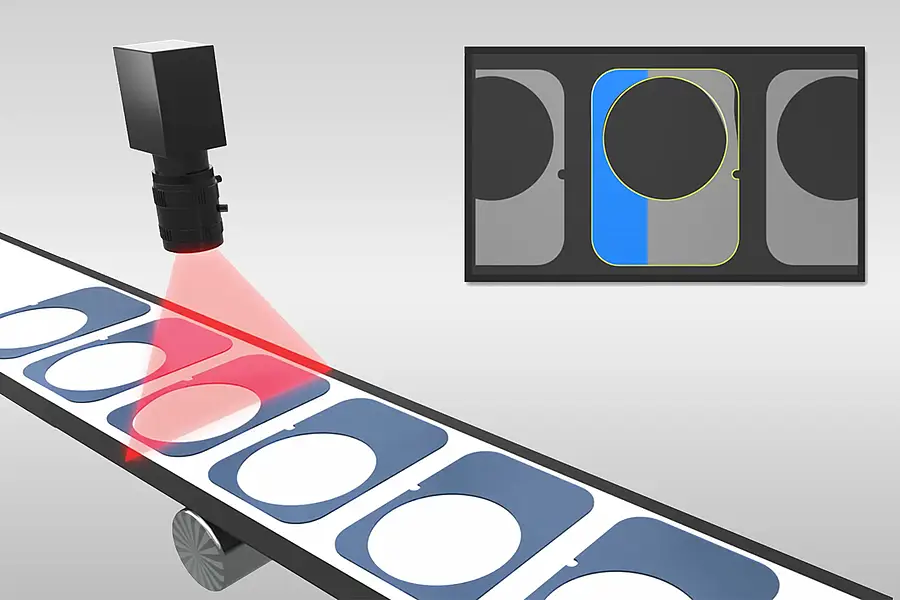
If your main concern is a controlled production environment, see cleanroom production. If dimensions, contours or shape deviations are the focus, the optical metrology page explains the possible inspection. Both topics can be coordinated for your component if the application requires it.
Define the production environment
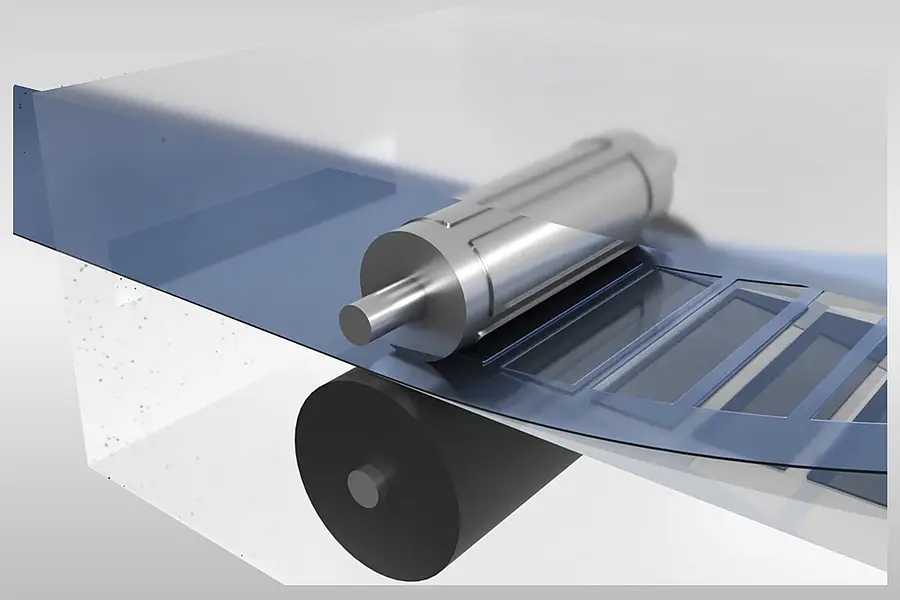
The cleanroom page gives more detail on possible processes and suitability assessments for starting materials.
Agree the scope of inspection
The metrology page explains measurable features and project-specific documentation.
05
Converting in the cleanroom
How starting material becomes a part suited to its application
Suitable production steps are combined according to shape, dimensions and form of supply.
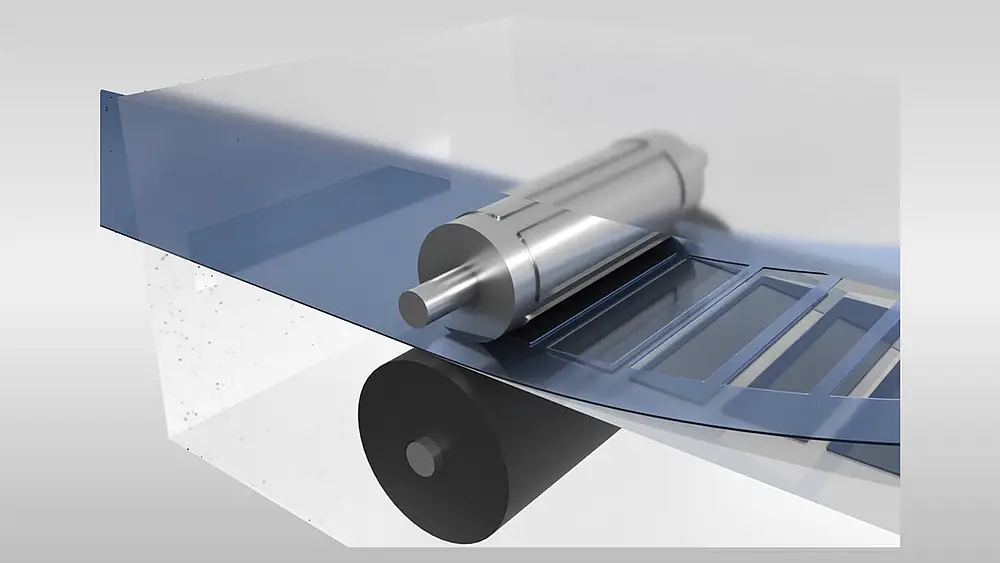
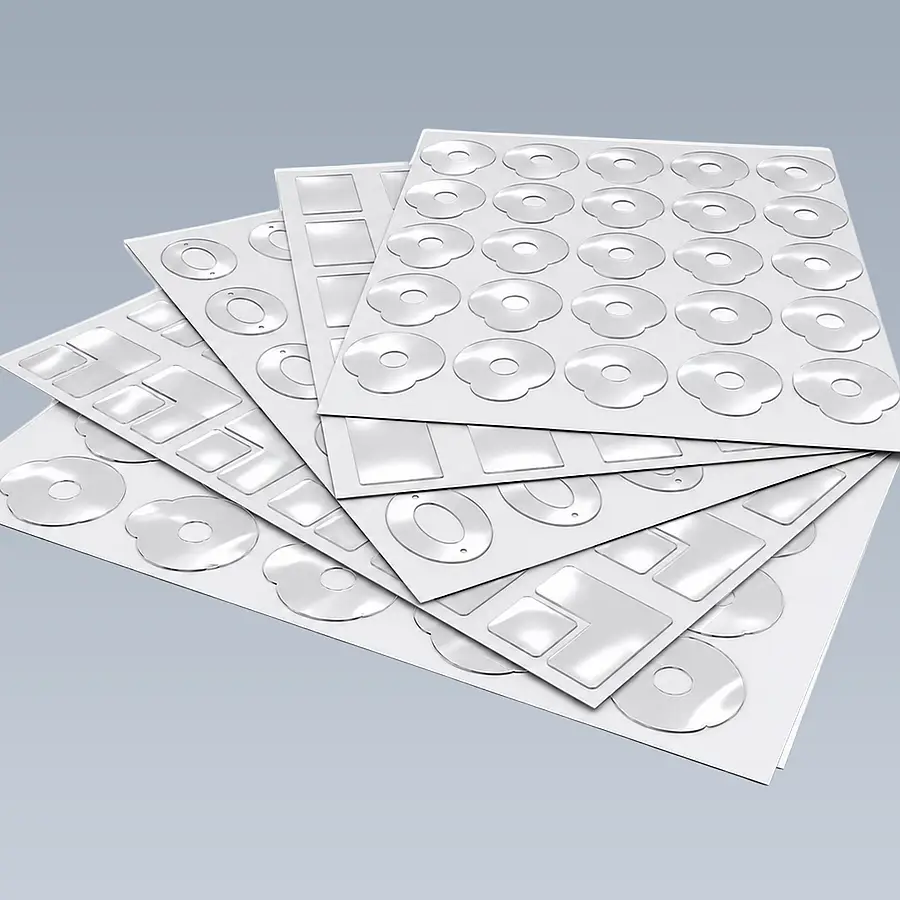
Cleanroom production provides a controlled environment; it is not a shaping process in its own right. Suitable materials can, for example, be laminated, coated, cut, die-cut and wound there. The specific sequence depends on the starting material, geometry and application.
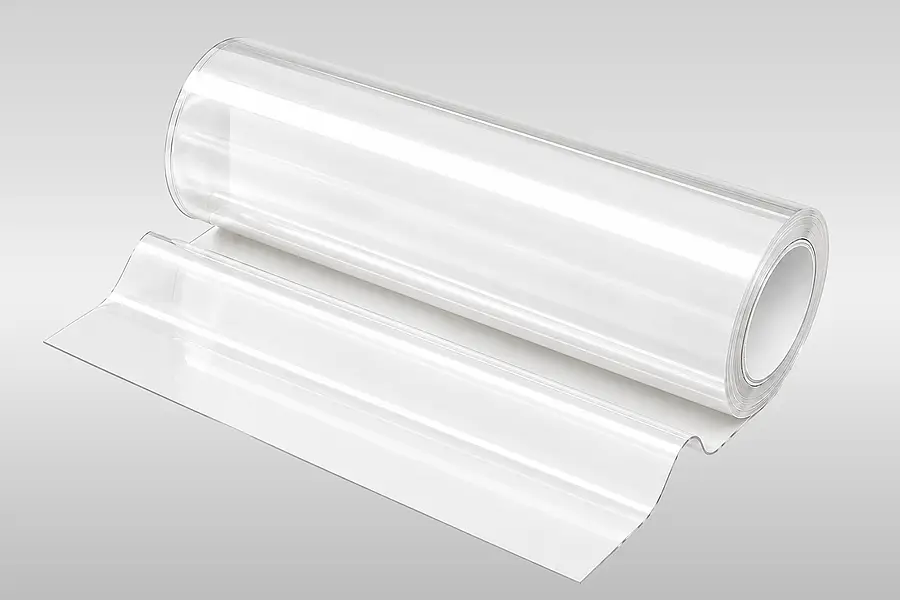
For optically clear films and technical die-cut parts, the contour and handling matter as much as the environment. Krückemeyer GmbH adapts the processing to the required form. Inspection of the finished product is agreed separately if needed; the cleanroom class alone does not provide evidence about the product.
Observe the limits of the cleanroom
Coated abrasives are not processed in the cleanroom. Laser processing is also not one of the production steps performed there.
- Assess suitable starting materials and possible combinations.
- Produce contours and dimensions using appropriate cutting or die-cutting steps.
- Align the form of supply and agreed quality inspection with the application.
06
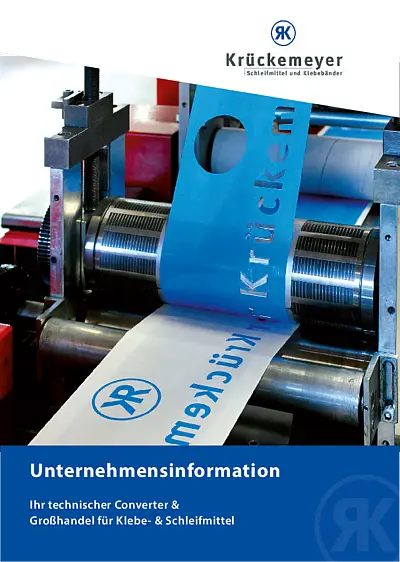
Company brochure with insights into the cleanroom
07
Further questions about technical cleanliness
Frequently asked questions about cleanrooms and inspection
Answers about material suitability, process limitations and evidence.
Can every new starting material be processed in the cleanroom?
No. New starting materials are assessed for suitability before cleanroom processing. Abrasion and potential particle emissions are particularly relevant. A general material description is not sufficient for a commitment. Tell us the specific material structure, desired shape and subsequent requirements. We can then assess whether and how the material can be processed under controlled conditions.
Is laser cutting carried out in the cleanroom?
No. Laser processing is not among the production steps that Krückemeyer GmbH can carry out in the cleanroom. A task involving laser processing and technical cleanliness requirements therefore calls for separate coordination of the process. Describe the material, contour and required result. We will assess which processing method and production environment are suitable for the specific application.
When is an optical measurement report available?
An inspection report is prepared by project-specific agreement. Optical metrology, inspection plans, sample sizes and permissible deviations are not automatic standard services. Specify which dimensions or contours are critical to your component's function and what documentation you need. Krückemeyer can then agree the possible measurements and scope of the report with you.
Can a prototype be tested before series production?
Yes, solution development can include trial production and a prototype. The customer tests the prototype in its application and approves it after successful testing. Changes can then be incorporated into the final design. To get started, it helps to provide details about the application, the material used so far, any problems encountered and the desired result. The specific sequence is agreed for the project.
08
Cleanroom production in detail
Assess the cleanroom production process
The detail page shows which processing steps are possible in the cleanroom and what information is needed to assess your starting material.
Discuss your cleanliness requirements
Tell us about the material, component, desired production environment and inspection features you need. Krückemeyer GmbH will discuss the possible solution with you.

Advice on technical cleanliness
Thomas Klein
Contact for converting
Discuss the starting material, cleanliness requirements and desired inspection with Thomas Klein.