

Cutting & Slitting of Tapes, Films and Abrasives
Bring material to the widths, lengths and formats you need
Krückemeyer cuts and converts adhesive tapes, films, foams and coated abrasives for your application. The starting material, dimensions, geometry and delivery format determine how the material is cut.
Cut to suit the application — Material, dimensions and the required delivery format determine the appropriate production process.
01
Cutting & Slitting
What does cutting and slitting involve?
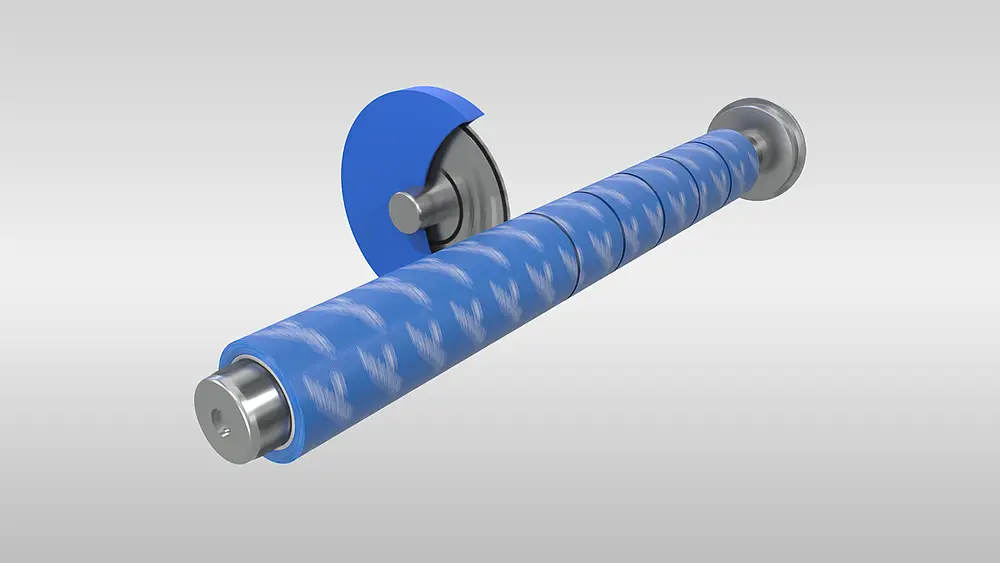
In converting, cutting and slitting bring starting material to widths, lengths or sheet formats suited to the application. A roll can be turned into narrower webs or rolls; sheet material can be cut to the required size.
This processing applies to adhesive tapes with different backings, technical films, foams and coated abrasives. Whether and how a material can be cut depends on its construction, backing, dimensions, core and required finish.
Straight roll slitting, cutting to sheet size and contour plotting serve different purposes. The process pages linked below show which approach may suit each material group and geometry.
For your enquiry, details of the starting material, required width and length, geometry, delivery format and application are helpful. A drawing or sample can support the discussion.
Dimensions depend on the material
For very narrow or large dimensions, material construction, geometry and delivery format determine what is technically possible. Include these details in your cutting enquiry.
Materials and cutting
02
Delivery format and material
Which cut suits the task?
Rolls, sheets and coated abrasives each place different demands on the result.
Roll material in widths suited to the application
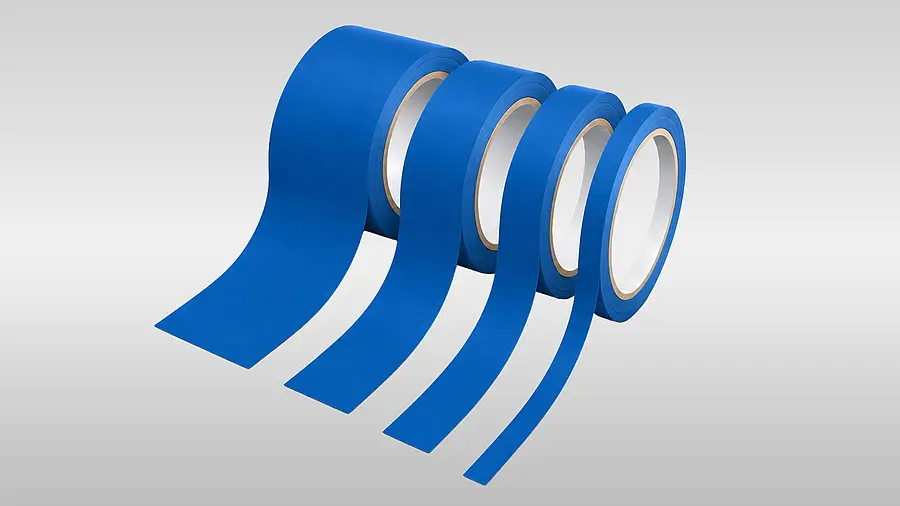
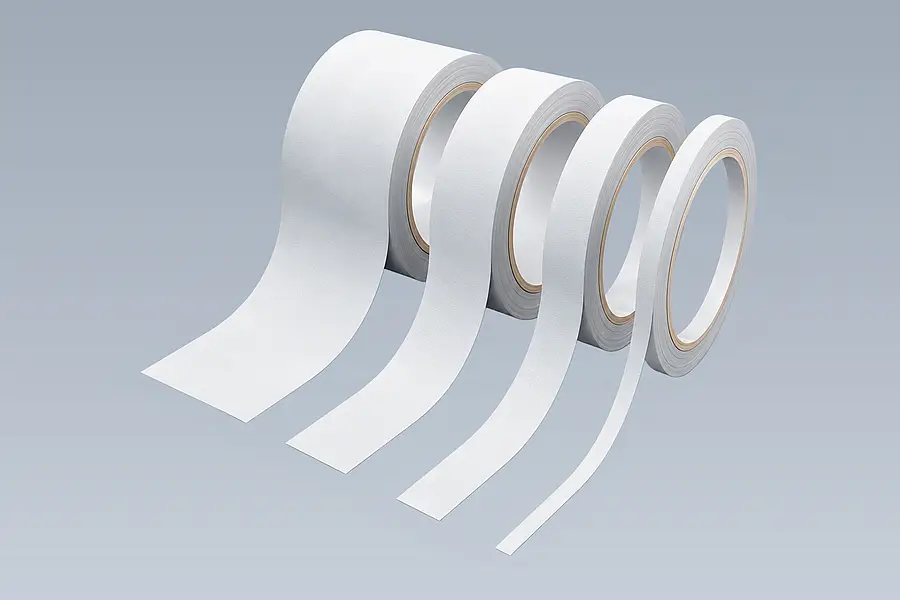
Roll material can be cut to the required strip width when the material construction, winding and core suit the dimensions. This applies to adhesive tapes as well as films. Explore adhesive tape cutting →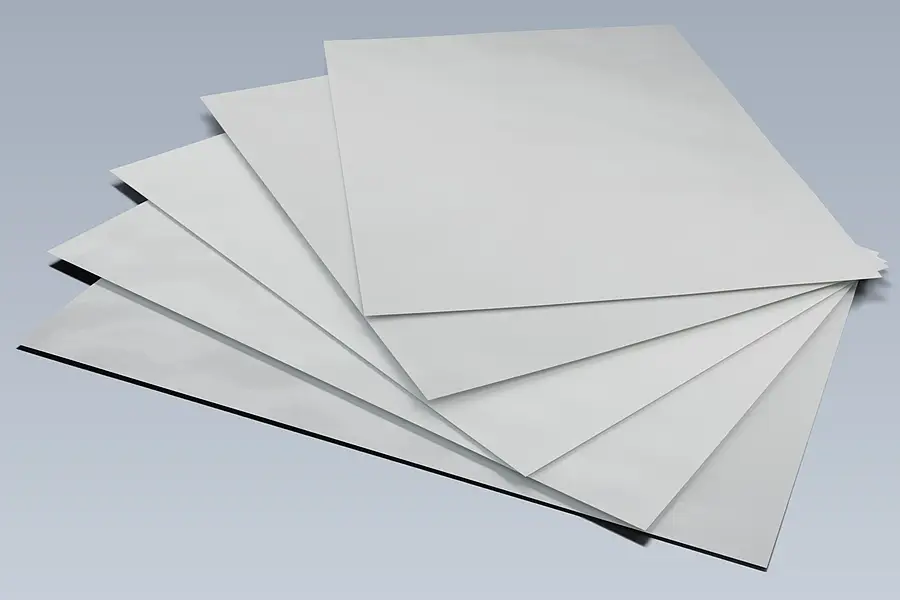
Sheet material in the required format
Roll material or combined adhesive layers can be made into sheets, which are then cut to size. Material construction and application determine whether a sheet or further converting is appropriate. Explore film cutting →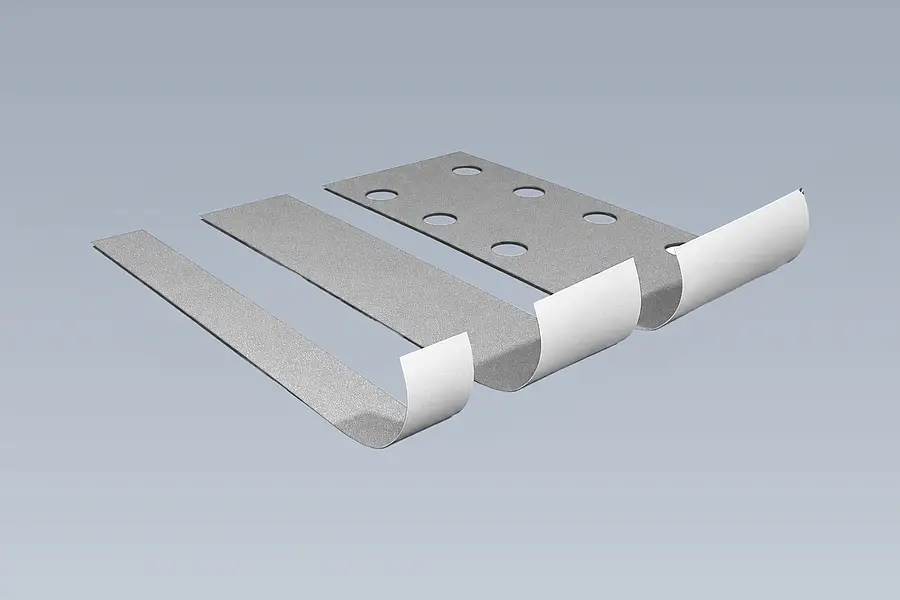
Processing coated abrasives
Abrasive paper, abrasive cloth, nonwoven abrasives and film-backed abrasives can serve as starting material for custom rolls or sanding belts. The backing, abrasive side, width and intended use determine the finish. Explore sanding belt cutting →03
Selection criteria
Which details determine the production process?
The choice of process depends on the material, geometry and required delivery format.
First, the starting material is identified: adhesive tape, technical film, foam and coated abrasives behave differently during cutting, guiding and winding. For laminates, the layers and any protective liner are also part of the description.
Next, width, length and contour are specified. A straight cut to make a narrower roll differs from a cut sheet or a plotted contour. The core, winding direction and whether the result is needed as a roll, sheet or individual piece also affect the finish.
The application and quality requirements also help determine the process. For very narrow or large dimensions, material, geometry and delivery format must be compatible.
04
Cutting tasks
Explore the relevant process pages
Each card leads to a process for the relevant material or cutting task.
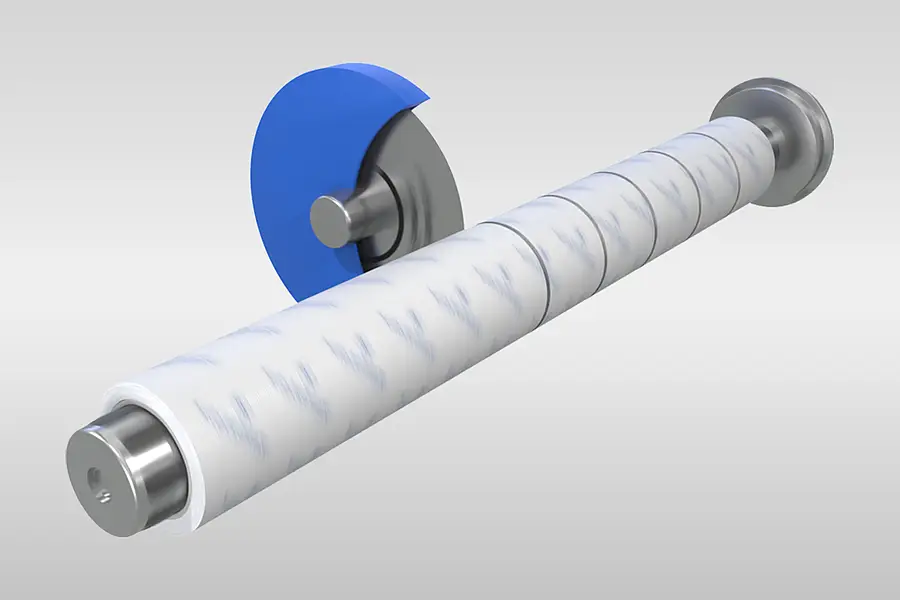
Cut adhesive tape
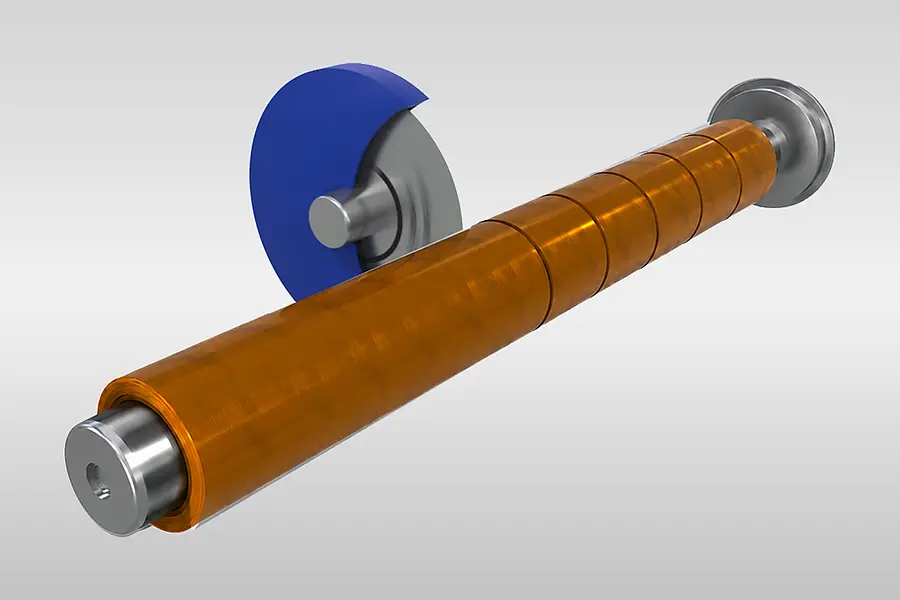
Cut films
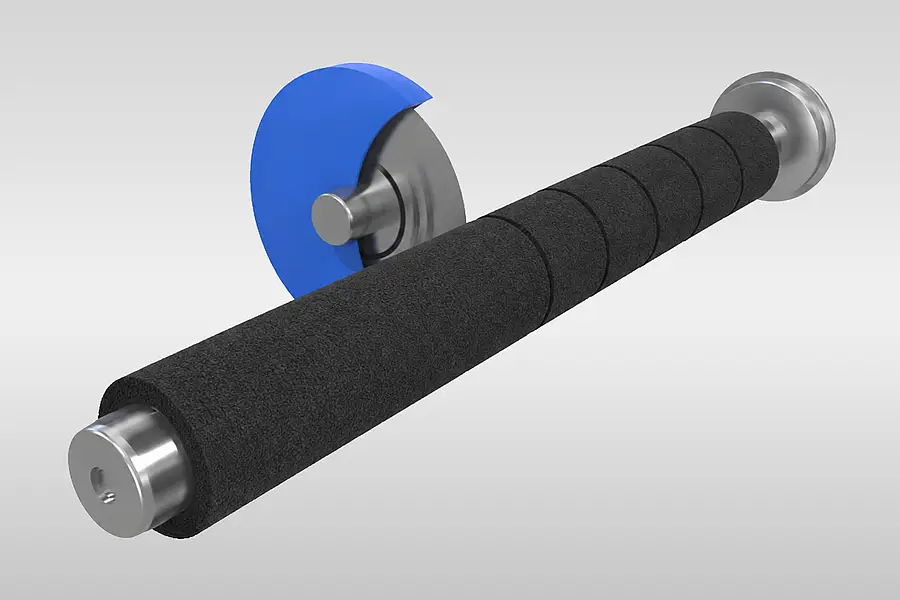
Cut foam
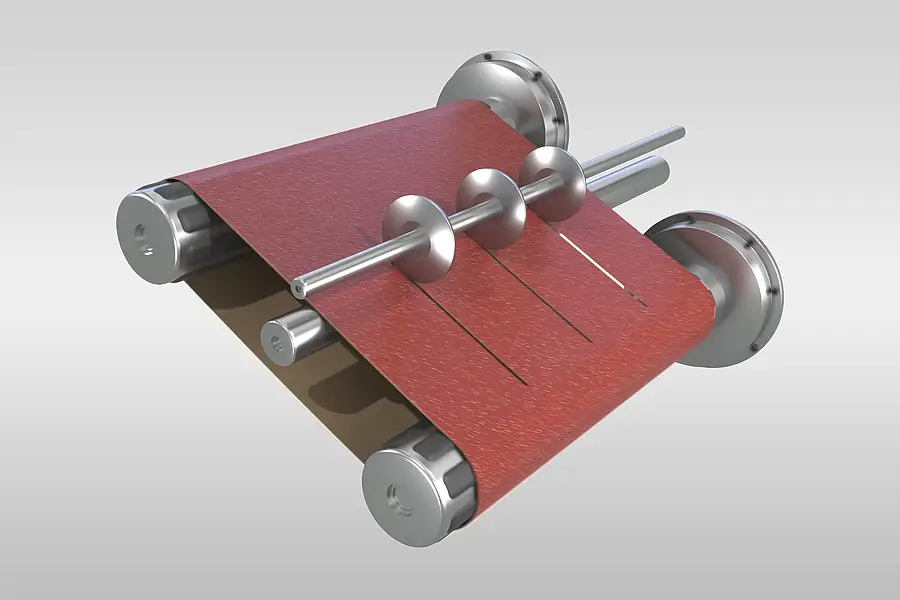
Cut sanding belts
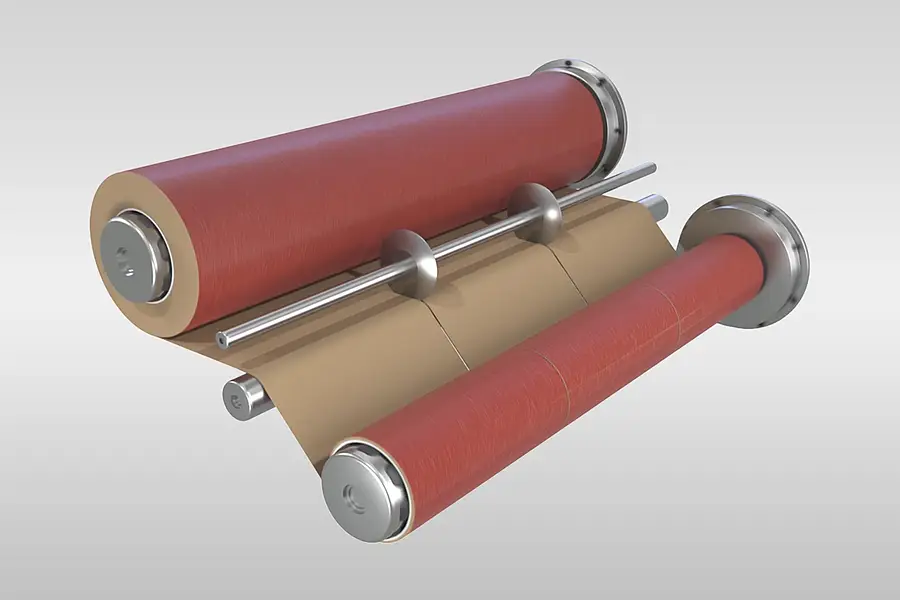
Cut abrasive rolls
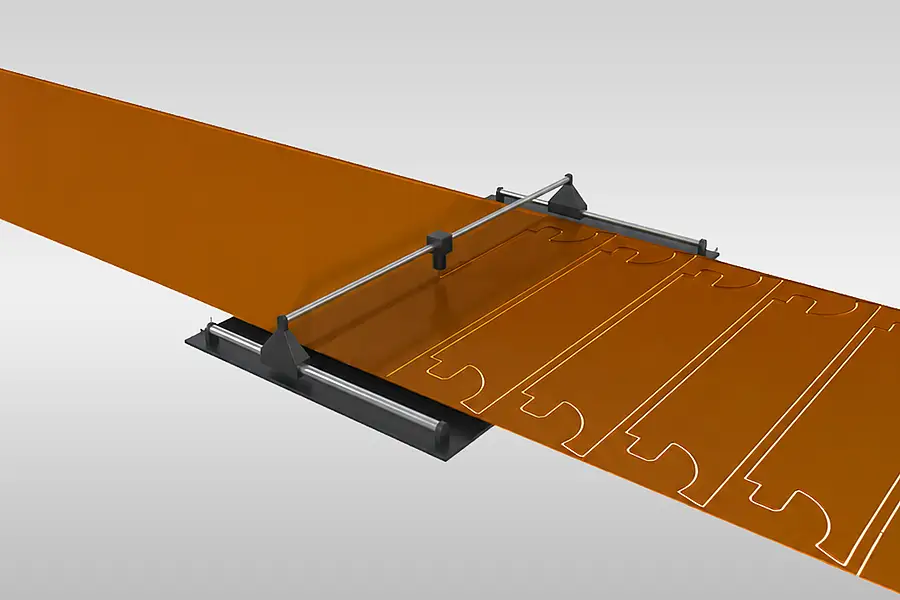
Plot film contours
Choose the detail page by starting material and required geometry. There you can learn more about the process and how to make an enquiry. Whether the cut can be produced depends on the material, dimensions and delivery format.
Roll dimensions
If the main aim is to change the width of a material web, roll slitting is the natural starting point. The subsequent winding and the core are part of the specification.
Contour instead of a straight cut
If a film needs a particular contour, the plotting page describes the corresponding process. Plotted contours depend on the shape and film construction; a straight cut has different requirements.
05
Production sequence
Cutting as part of coordinated converting
Cutting can be combined with rewinding, laminating or further shaping.
Cutting does not necessarily stand alone in converting. Starting material can be prepared or built up as a laminate, then cut to size and supplied in the appropriate delivery format. The order of the steps can vary with the material and desired result.
Slitting and rewinding, for example, combines rewinding and cutting. In other tasks, cutting is followed by another processing step, such as die cutting or the addition of a processing aid. The suitable combination is determined by the application, material, geometry and finish.
From starting material to delivery format
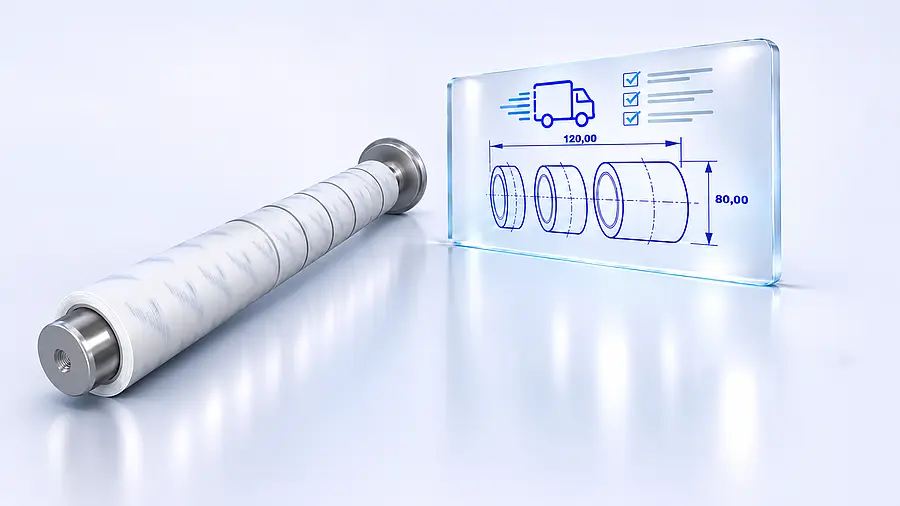
Alongside the dimensions, describe how the cut material will be used and supplied in your production process. This helps determine the appropriate process route.
- Cut roll material to the required widths or lengths.
- Cut suitable sheet material to the required format.
- Combine cutting with rewinding or further converting steps.
06
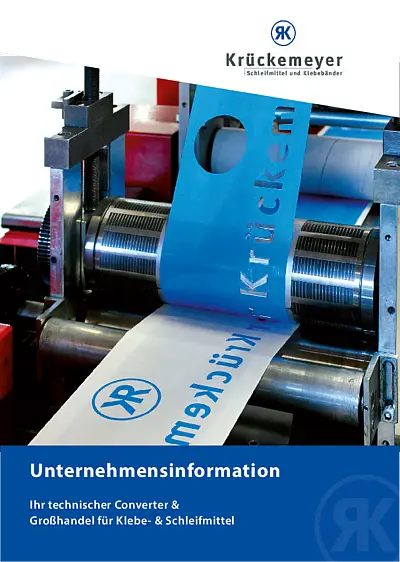
Production brochure
07
Questions about cutting
Frequently asked questions about cutting and slitting
Answers about feasibility, required details and further processing.
What details help when enquiring about custom cutting?
The starting material and its construction, required width and length, geometry, core or delivery format, and intended application are helpful. A drawing or sample can support the discussion. Krückemeyer uses these details to assess the production process and feasibility for the specific material.
Are very narrow roll widths possible for every adhesive tape?
No. How narrowly a roll can be slit depends on the material. A film tape may allow very narrow widths, while a paper tape may not under the same conditions. The core, geometry and finish also affect the possible dimensions.
Can cut material be supplied as a roll or sheet?
Yes, depending on the starting material and the task. Roll material can be processed into narrower rolls or cut to sheet size if its construction allows. The dimensions and intended use determine the delivery format.
Is there a standard minimum quantity for custom cutting?
There is no single fixed minimum quantity for custom cuts. It depends on the material, processing and the order's price framework. State the quantity you need in your enquiry so we can assess it together with the cutting requirements.
Do a starting material's properties and approvals automatically remain valid after cutting?
No, not automatically. Whether manufacturer approvals and properties critical to function continue to apply after cutting depends on the material and its application and must be clarified for the order. Cutting alone does not give the material any additional properties.
08
Next technical step
Choose the right cutting service
If you are starting with adhesive tape, the detail page shows the route to the required roll or strip dimensions. For other materials, choose the relevant card above.
Discuss your cutting requirements
Tell us about the starting material, dimensions, geometry, delivery format and application. We will work with you to determine which production process suits your task.

Advice on cutting
Thomas Klein
Contact for converting
Discuss the material, dimensions and delivery format with Thomas Klein.