

Laminating and Self-Adhesive Coating of Tape, Film and Foam
Joining material layers and preparing surfaces for the application
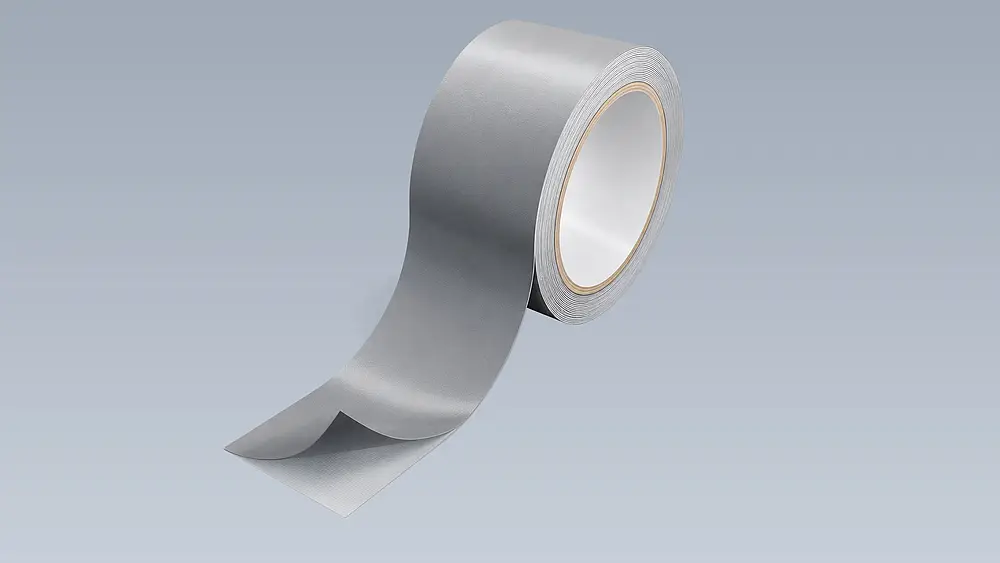
In laminating, Krückemeyer GmbH joins suitable material webs into a coordinated structure. Self-adhesive coating adds an adhesive layer; deliberately non-adhesive areas are also possible. Your required function, shape and subsequent processing are decisive.
From starting material to material composite — The layer structure and design are assessed for each application.
01
Laminating and self-adhesive coating
What laminating and self-adhesive coating produce
Laminating joins suitable starting materials into a multilayer structure. Films, adhesive tapes and foams can be prepared individually or processed as a composite. Which layers and adhesive areas make sense depends on the task the component must perform.
In self-adhesive coating, a suitable material receives an adhesive layer. Single-sided or double-sided versions are possible; suitable sheet material can also be processed. The process makes it possible to combine properties of different materials.
Another task is to create deliberately non-adhesive zones: an adhesive area can be covered in places with a suitable structure. This can, for example, provide a gripping area on an adhesive part. The material structure and subsequent handling must be considered together.
Clarify the structure before the process
Tell us the starting material, required layers, adhesive areas and delivery format. Krückemeyer will assess a suitable production route based on these details.
Go directly to the options
02
Material structures
Which version suits your task?
The surface function and starting material guide the design.
Laminate material layers
Suitable films, adhesive tapes or foams can be joined into a multilayer structure. What matters is the role each layer performs on the component and how the composite is subsequently processed. View adhesive tape lamination →Make the surface self-adhesive
A suitable film or sheet material can be made self-adhesive on one or both sides. The material, adhesive layer, liner and required shape are coordinated for the application. View self-adhesive coating →Define adhesive areas precisely
Laminating can be used to make an adhesive area deliberately non-adhesive. This restricts the function of a material structure to specific zones. The position and size of these zones depend on the component and its handling. View non-adhesive tape →03
Selection criteria
What matters in the design?
Clarify function, layers and delivery format before choosing the process.
The required result in the application comes first: should a composite be created, should a surface become self-adhesive, or should an area explicitly remain non-adhesive? The starting material and material combination are then determined. A material designation alone does not guarantee a particular structure.
Geometry, dimensions and the required delivery format are important for assessing production. Roll goods, sheet material and individual parts place different demands on subsequent handling. In multilayer structures, the layers, including any liner, must be suitable for later processing.
Also describe how the customer will process the part and what quality requirements apply. Laminating can be combined with cutting, die cutting or other converting steps; the specific sequence is determined for each project.
04
Detailed services
Laminating and self-adhesive coating by material and function
These existing subpages cover specific production tasks in more detail.
Adhesive tape lamination
Technical film composites
Self-adhesive coating
Foam lamination
Film coating
Non-adhesive tape
Choose a detailed page according to the starting material or the required surface function. The detailed pages explain the respective production route; for an enquiry, your details of material, shape, dimensions and application are enough to begin with.
If the layers have not yet been decided
Describe the task the component must perform and the required function of each side. This allows a technical assessment of the possible material structure.
If subsequent processing is already defined
Specify the cut, shape, liner and delivery format. These details help coordinate laminating with subsequent processing.
05
Further processing of the composite
How the material composite is processed further
Laminating can be part of a coordinated sequence of converting steps.
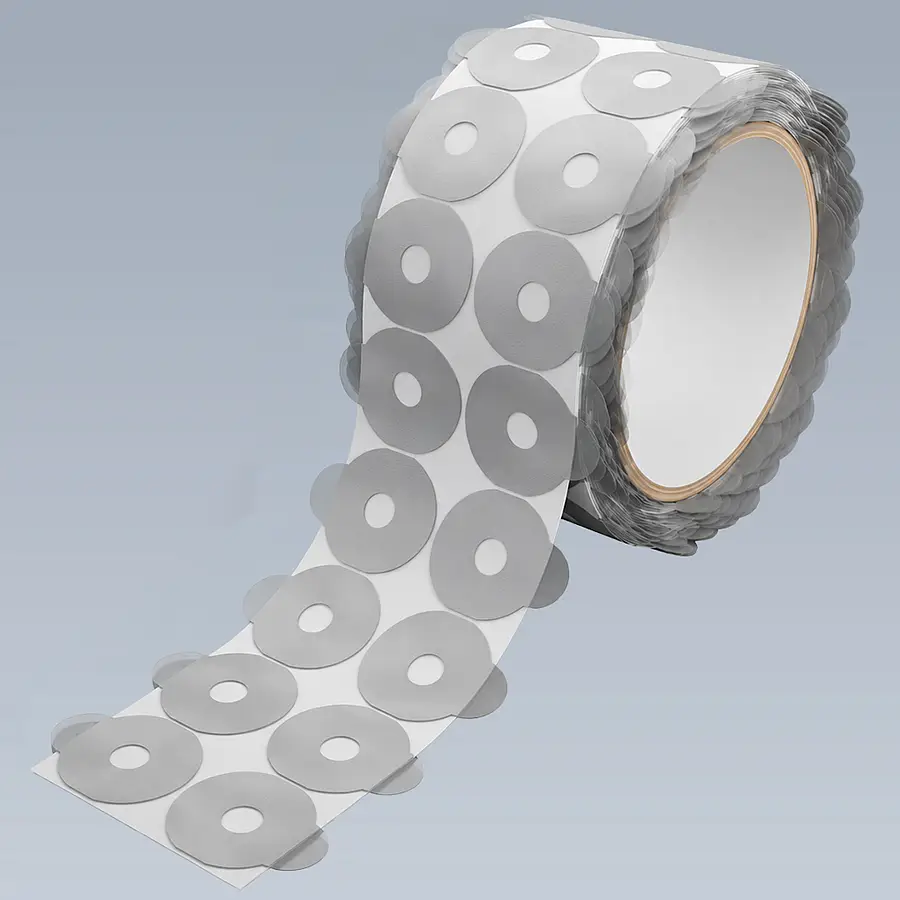
A laminated composite is not necessarily in its final delivery format. Depending on the task, cutting, shaping or a suitable liner may follow. The processing sequence can vary; in multilayer parts, individual layers may be processed differently.
Krückemeyer coordinates the process with the material, geometry, application and required delivery format. This makes it possible to consider how the part will later be gripped or applied while it is still being designed.
From composite to delivery format
Roll goods, sheet material and individual parts require the layer structure and processing to be coordinated accordingly.
- Cutting defines sizes and dimensions.
- Die cutting or suitable laser cutting shapes the part.
- Winding or sheet converting prepares the required delivery format.
06
Questions about laminating and self-adhesive coating
Frequently asked questions about production planning
Answers about requirements and limitations that matter before an enquiry.
Can laminating take place in a cleanroom?
Yes, laminating is one of the possible processes in an ISO 9 cleanroom. New starting materials are assessed for suitability before processing; abrasion and particle emissions are particularly relevant. The classification describes the air in the production area. It does not prove that a finished material composite is particle-free or approved for a specific application.
What quality checks are possible for a material composite?
Checks and documentation are agreed for each project. Optical measurement technology can be used at the customer's request or by contractual agreement. The component determines which characteristics are checked, the sample size and the permissible deviations. This does not imply standard test values or automatic inspection of every version.
How is a new layer structure tested before series production?
One possible route runs from clarifying the application and selecting materials through trial production to a prototype. The customer tests the prototype in their application and approves it after successful testing. Changes can then be incorporated into the design. Details of the material used so far, problems and the desired result help prepare the trial in a targeted way.
Can a laminated film subsequently be laser cut?
Suitable sheet material can be laser cut after laminating. Whether this is possible for a specific film composite must be assessed on the basis of the material, layer structure and contour. PVC is not laser cut. The final shape should therefore be known when planning the composite so that laminating and shaping can be coordinated effectively.
07
Adhesive tape lamination
Consider adhesive tape as a composite
The detailed page explains how the production service for adhesive tape is classified and which version needs to be assessed for your application.
Discuss your lamination project
Describe the material, required structure, shape and subsequent processing. Krückemeyer GmbH will assess a suitable version with you.

Advice on laminating and self-adhesive coating
Thomas Klein
Contact for converting
Discuss your material structure, required adhesive area and subsequent processing with Thomas Klein.