

COATED ABRASIVES · ROLL SLITTING
Cut abrasive rolls to size
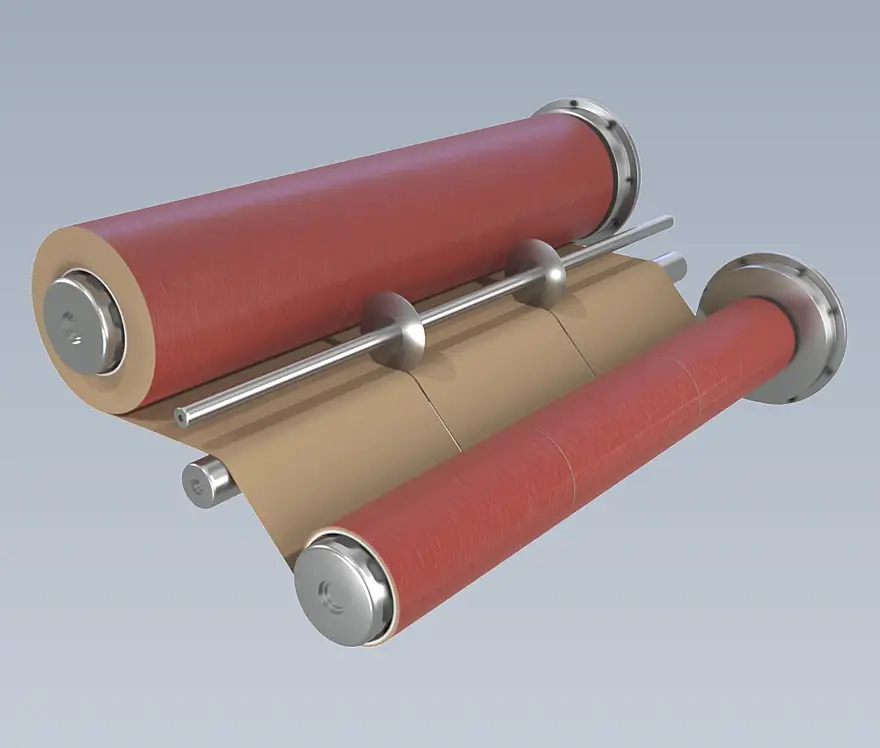
Krückemeyer cuts suitable coated abrasives from roll stock to the requested width and tailors the roll length and winding to your application. The key factors are the starting material, backing and required delivery format.
25–1,650 mm
Roll width range
700 mm
Maximum master roll diameter
400 mm
Maximum finished roll diameter
01
ABRASIVE ROLLS FROM ROLL STOCK
Turning starting material into an abrasive roll suited to your application
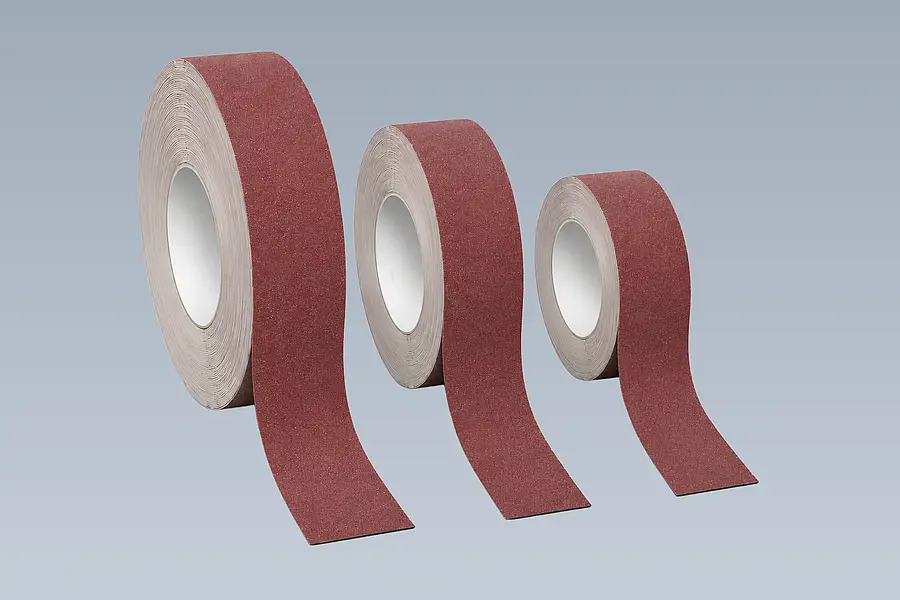
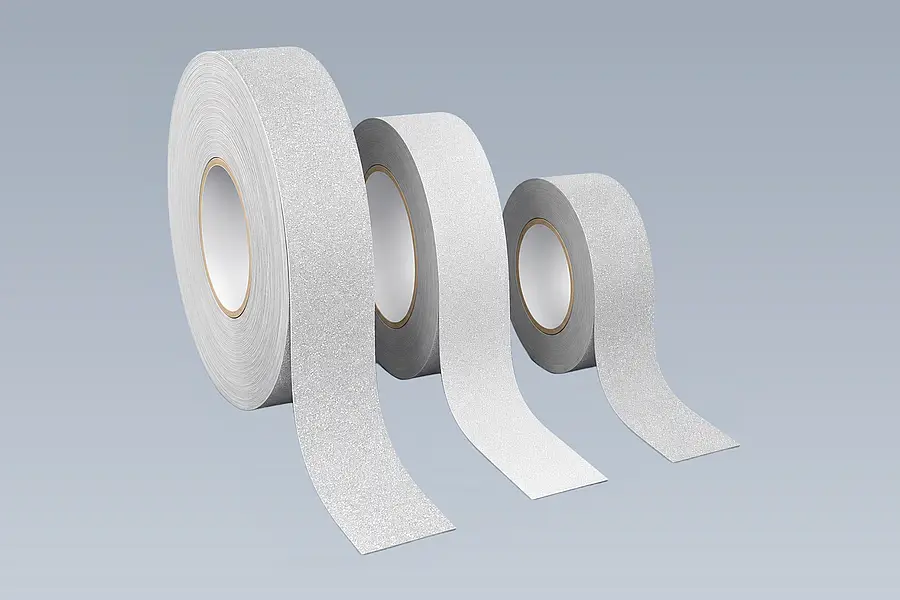
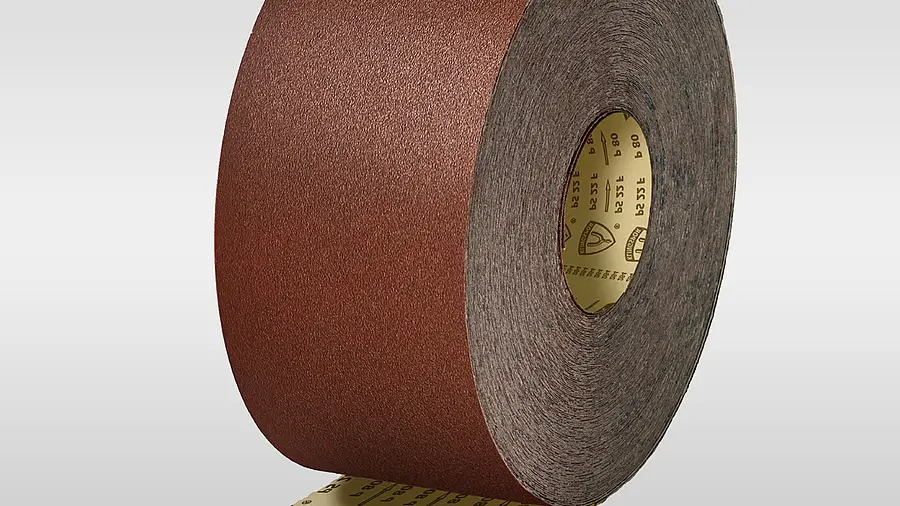
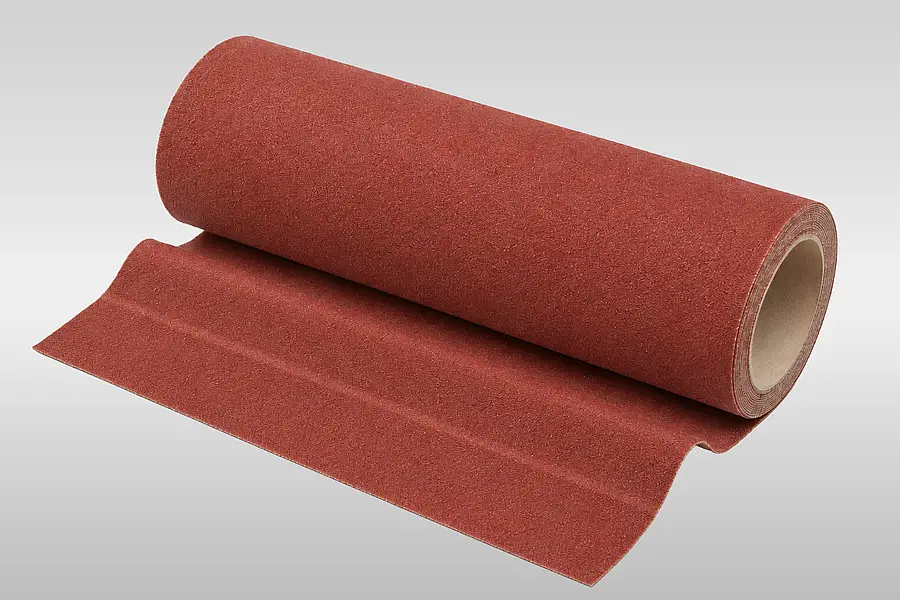
When cutting abrasive rolls, coated abrasive starting material is cut to the required roll width and wound to the agreed length. We process abrasive paper, abrasive cloth, non-woven abrasives and film-backed abrasives. An abrasive roll is a delivery format; it is not the same as a closed-loop sanding belt.
For subsequent handling, the backing and required width matter alongside the abrasive material, as does whether the abrasive side should face inward or outward. The possible roll length depends on material thickness, winding and the permitted finished roll diameter. We therefore check the requested combination before production.
This gives you a roll format suited to its intended use and to how the material is taken off the roll. If the starting material is to become a closed-loop belt instead, sanding belt converting is the appropriate next process.
02
WORKING TOGETHER ON ABRASIVE ROLL CUTTING
Step 01
Clarify application and starting material
Tell us which abrasive you use or would like to use, the backing and the intended application. An existing material designation or sample also helps us assess the requirements.
Step 02
Check roll dimensions and winding
We review the required width, roll length, master roll, finished roll diameter and abrasive-side orientation together. Which dimensions can be combined depends on the starting material and winding.
Step 03
Agree the specification
We clarify how the roll will be taken off and used. A drawing or sample helps with the discussion if the dimensions or handling need explanation.
Step 04
Cut and supply
We cut the agreed starting material and supply the abrasive roll with the agreed width, roll length and abrasive-side orientation.
03
ROLL CUTTING OPTIONS
04
POSSIBLE PRODUCTION RESULT
05
SUITABLE STARTING MATERIALS
06
ROLL SLITTING ON VIDEO
07
TECHNICAL SELECTION CRITERIA
| Criterion | Dimensions and specification | Relevant to your enquiry |
|---|---|---|
| Roll width | 25–1,650 mm | Required width and specific starting material |
| Master roll | Maximum diameter: 700 mm | Dimensions of the available master roll |
| Finished roll | Maximum diameter: 400 mm | Roll length, material thickness and winding |
| Abrasive side | Inward or outward | Required orientation when taking material off the roll |
Compatible dimensions depend on the starting material and winding.
08
DETAILS FOR YOUR ABRASIVE ROLL ENQUIRY
Describe the application and the desired sanding result. Tell us the starting material or abrasive you currently use, the backing, the required roll width and length, which way the abrasive side should face, and how you intend to handle the roll. Details of the master roll and required quantity help us assess the technical requirements and plan production.
A drawing or sample is useful if it helps explain the specification and use. Whether the width and roll diameter can both approach the stated limits depends on the material and required winding.
09
QUESTIONS ABOUT ABRASIVE ROLL CUTTING
Which abrasives can be cut into abrasive rolls?
Krückemeyer GmbH processes coated abrasives for this purpose: abrasive paper, abrasive cloth, non-woven abrasives and film-backed abrasives. The possible roll width depends on the starting material and backing. The roll length depends on material thickness, winding and the permitted finished roll diameter. Also tell us how you intend to handle the roll and whether the abrasive side should face inward or outward. We can then tailor the specification to your application.
What determines the possible length of an abrasive roll?
It depends on material thickness, winding and the permitted finished roll diameter. The roll length therefore cannot be determined from the required width alone. Information about the starting material, master roll and intended handling helps us assess the requirements. We coordinate the starting material, roll length and winding for your application. We also consider whether the abrasive side should face inward or outward.
Can the abrasive side of the roll face inward or outward?
Yes, both orientations are possible when processing rolls. State in your enquiry whether the abrasive side should face inward or outward and how you will take material off the roll and use it. We consider this handling together with the starting material, width and roll length. Material thickness, winding and the permitted finished roll diameter limit the possible roll length.
What is the difference between an abrasive roll and a sanding belt?
An abrasive roll is a wound delivery format made from a coated abrasive. A sanding belt, by contrast, is a closed-loop finished product with a belt joint. For a closed-loop belt, the requirements for the joint matter as well as the width and length. If you need a belt for your machine, see the relevant service under sanding belt cutting.
Enquire about abrasive roll cutting
Send us the starting material, required roll dimensions and application. We will review the specification with you.

ABRASIVES ADVICE
Jürgen Müller
Contact for converting
Jürgen Müller will discuss the starting material, roll dimensions and suitable specification for your sanding task with you.