

RUBBER CONVERTING
Rubber processing for application-specific cut parts and shapes
We process suitable rubber materials into cut parts and shaped components tailored to your requirements. Your starting material, the required contour and handling in your production process are decisive.
01
RUBBER AS A STARTING MATERIAL
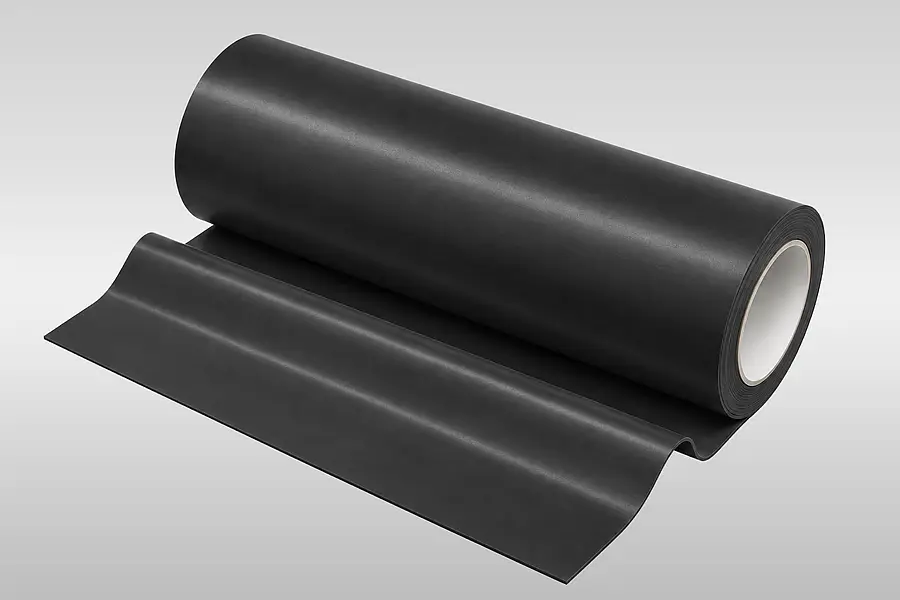
Turning a rubber web into a practical finished format
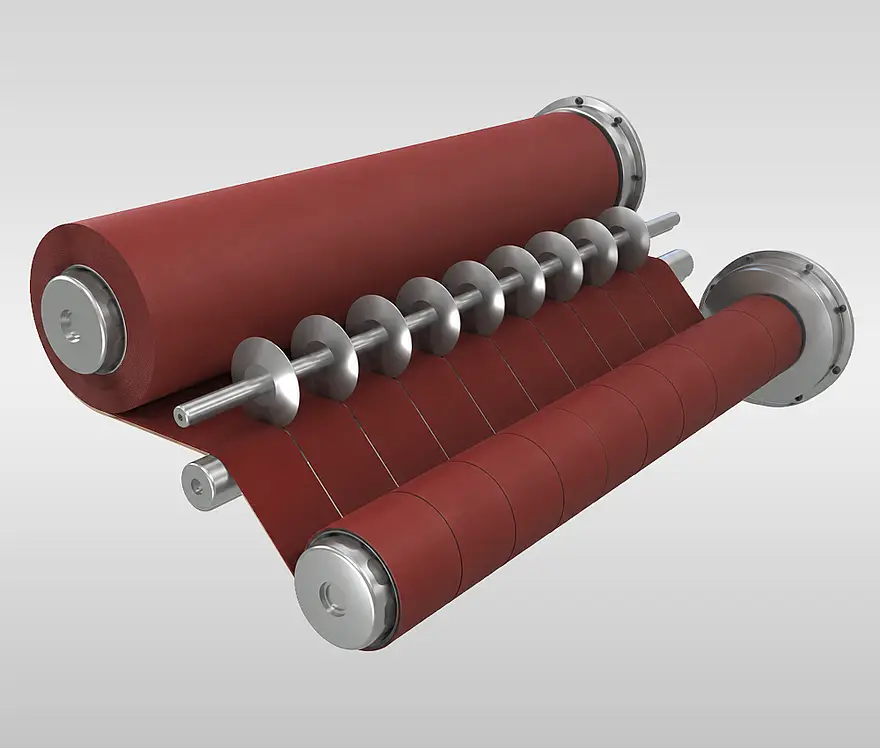
Rubber processing starts with the specific material supplied. A suitable web can be slit to width or die-cut to a contour. For laser cutting, we also check whether the material and the required cut edge are suitable. The material name alone is not enough to confirm that it can be processed.
What matters for your application is the result: a component must be available in the required geometry and be easy to pick up, position and process further in your workflow. We therefore clarify the material, construction, dimensions, drawing and required delivery format together. For multi-layer constructions, we define which layers are to be processed.
This page provides an overview of the material group. For details of the processes, see rubber die cutting and laser cutting rubber. We assess whether a specific rubber material is suitable for the chosen process based on your sample and requirements.
02
FROM RUBBER WEB TO FINISHED FORMAT
Step 01
Clarify the application and starting material
Describe the component, its application, the rubber material and how it has been processed so far. A drawing and sample help us understand your requirements clearly.
Step 02
Assess the processing method
We compare the material, construction, dimensions and contour with slitting, die cutting or laser cutting. We assess suitability for the specific combination.
Step 03
Agree on the finished format
We agree on the contour, which layers are to be separated, and how the parts will be supplied. If needed, we produce trial parts for you to test in your application.
Step 04
Production and supply
Once the details are agreed, the appropriate version is produced. The agreed delivery format should suit the way you handle and apply the parts.
03
PROCESSING OPTIONS FOR RUBBER
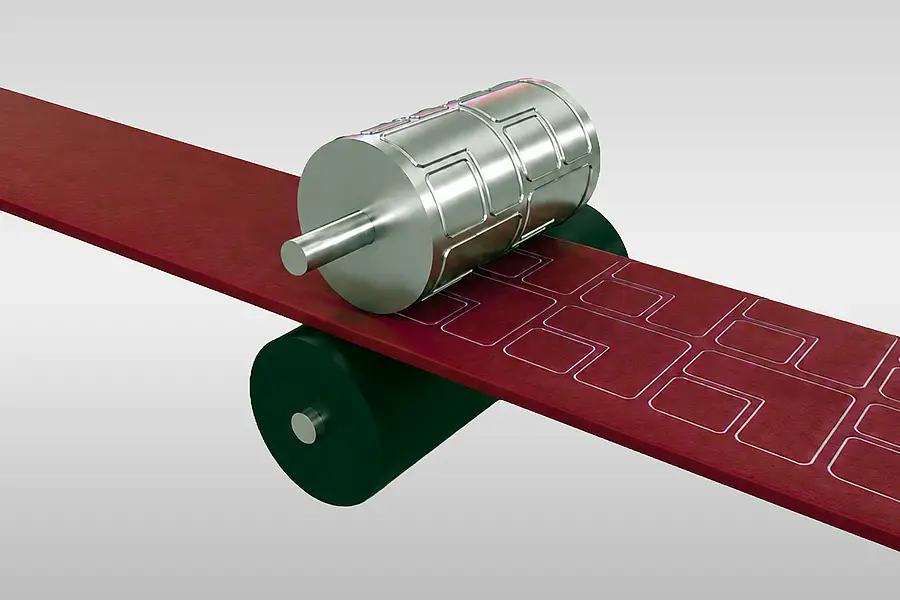
Rubber die cutting
Suitable rubber webs are processed to an agreed contour. Layer construction, geometry and the required delivery format determine how the process is designed. Explore rubber die cutting →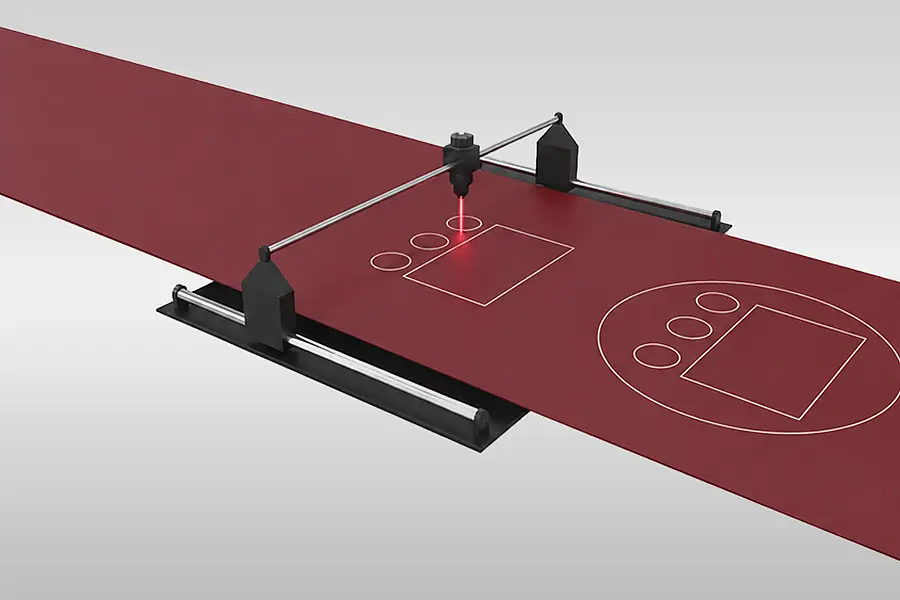
Laser cutting rubber
Contours can be laser-cut from rubber materials that are suitable for the process in principle. We assess material behaviour, thickness and the quality of the cut edge in advance. Explore laser cutting rubber →04
POSSIBLE RUBBER PRODUCTS
Die-cut rubber shapes
An agreed contour is cut from suitable material. Whether the parts are supplied on a roll, on a sheet or individually depends on the application. Rubber die cutting →Laser-cut contour parts
With suitable material, contours can be produced without a shape-specific die cutting tool. Feasibility and cut quality depend on the specific rubber material and geometry. Laser cutting rubber →05
STARTING MATERIAL AND RELATED OPTIONS
Rubber web
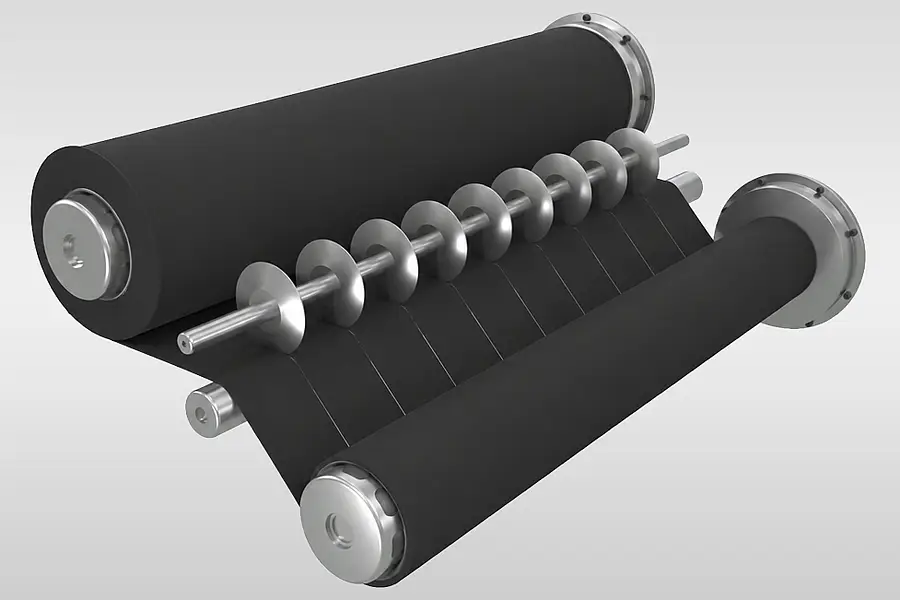
The specific web, its dimensions and its construction are the starting point for choosing a processing method. Converting roll-fed material is a key focus. Assess die cutting →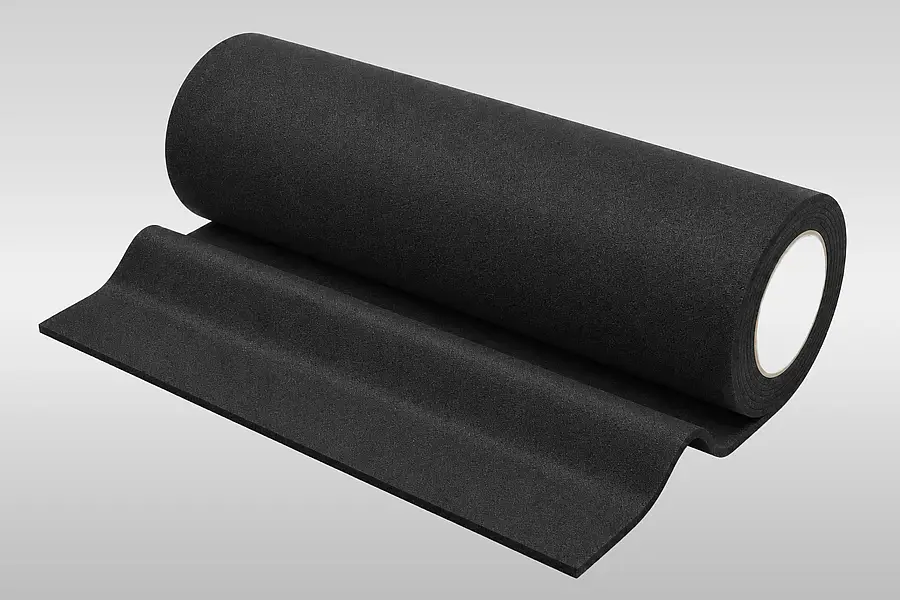
EPDM cellular rubber
For EPDM as a specified material version, processing and the result are also assessed for each project. The dedicated material page explains this option. Explore EPDM processing →06
RUBBER PROCESSING IN PICTURES
07
DETAILS FOR YOUR RUBBER ENQUIRY
Describe the result you need for your application and identify the rubber material as precisely as possible. A sample or data sheet, Shore hardness, material thickness, details of the layer construction, a drawing with dimensions and the required contour, and the desired quantity are helpful.
Tell us whether the part is to be slit, die-cut or, subject to assessment, laser-cut, which layers must be separated, and how you will process the parts further. During die cutting, rubber may deform depending on its material properties. As a result, the required contour cannot always be produced precisely. Depending on its Shore hardness and thickness, the material may be unsuitable for die cutting. We assess feasibility based on the information you provide and, where necessary, a sample. The required delivery format, such as on a roll, on a sheet or as individual parts, should also be included in your enquiry. If any details are missing, we clarify them together before production.
08
QUESTIONS ABOUT RUBBER PROCESSING
Which rubber materials can Krückemeyer process?
Suitable rubber materials can be converted if they are compatible with the intended process and result. A description such as “rubber” is not enough for a reliable commitment. The specific material grade, construction, dimensions and required contour are decisive. If possible, send us a sample or data sheet and a drawing. We use these to assess which processing method may be suitable for your application.
When is die cutting suitable for rubber?
Die cutting may be suitable for rubber webs when the contour, material construction and required separation of layers are compatible with the process. Whether die-cut parts are best supplied on a roll, on a sheet or individually also depends on how you will handle them later. The shape is determined by the drawing and the application; this page does not specify a universal die shape or a general limit for every type of rubber.
Can rubber also be laser-cut?
Yes, provided that the specific rubber material is suitable for laser cutting in principle and the resulting cut edge meets the requirements. Material behaviour, thickness and contour must be assessed individually. Suitability for laser cutting cannot be confirmed from the material group name alone. A drawing and material details help us compare this method with die cutting and select the appropriate process for your part.
What information is needed for a rubber processing quotation?
We need the application, the specific starting material, a drawing or sketch showing the contour and dimensions, and the required quantity and delivery format. It is also important to know how you intend to pick up and use the finished part. For a multi-layer construction, please identify the layers to be separated and those to remain intact. A sample or technical data sheet supports the feasibility assessment and helps us agree on any trial production.
Enquire about rubber processing for your component
Send us the material details and drawing. We will assess the appropriate processing method and agree on the finished format with you.

RUBBER PROCESSING ADVICE
Thomas Klein
Contact for converting
Thomas Klein will discuss the material, contour and required delivery format with you.